Apartments for Rent in Ochota — A Guide to the District
Apartments for rent in Ochota, Warszawa: prices by size, Stara Ochota, Filtry, Rakowiec and Szczęśliwice, the M1 metro nearby, trams, rail and parks.

How much does an apartment for rent in Ochota cost? As of August 2026: the average asking price for the whole district is about 3,300–3,500 PLN per month, at a rate per square metre of around 77–84 PLN/m² (data from domiporta.pl and znajdznajem.pl). A studio usually costs 2,300–2,900 PLN, a 2-room apartment 2,700–3,700 PLN, and a 3-room apartment 3,800–5,200 PLN — to each of these amounts you still have to add the czynsz administracyjny (administrative service charge) and utilities. Ochota is one of the most densely populated districts of Warszawa (right after Praga-Południe) — about 78,600 residents on just 9.72 km² (GUS/BDL data, 2024) — and despite its small area it divides into four micro-areas that differ in atmosphere and prices: Stara Ochota, Filtry, Rakowiec and Szczęśliwice. There is no metro station directly within the district, but the eastern part borders the M1 metro (Pole Mokotowskie), and a dense tram network runs through the centre of Ochota along Grójecka and aleje Jerozolimskie. Below: prices by size, the differences between micro-areas, commuting, parks and who Ochota suits best.
How much does it cost to rent an apartment in Ochota in 2026?
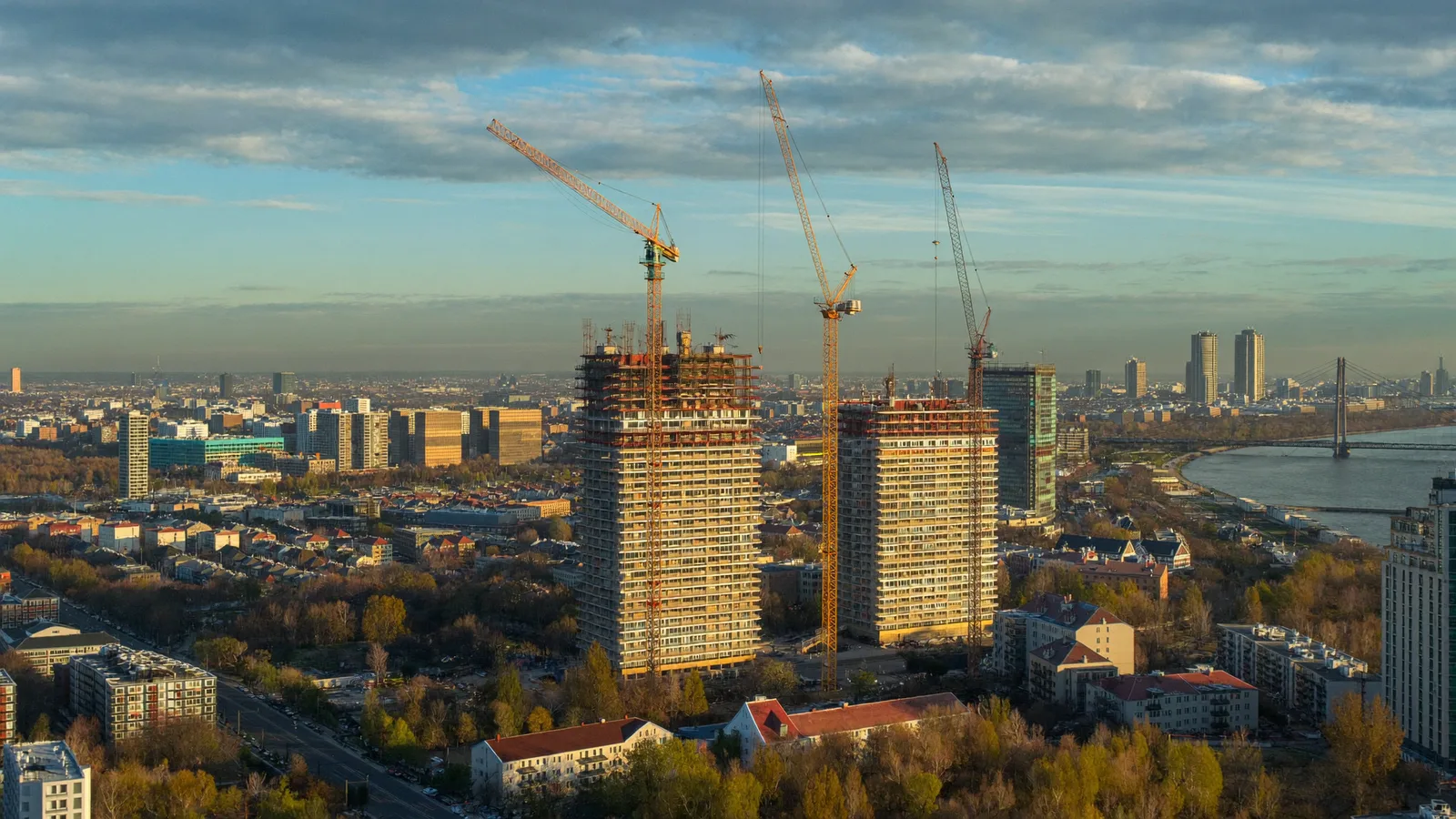
Ochota has for years sat in the middle of the Warszawa rental price list — more expensive than Białołęka or Targówek, but clearly cheaper than neighbouring Śródmieście or Mokotów. According to the znajdznajem.pl index from April 2026, the average price in the district was 3,515 PLN with 586 active listings, while the domiporta.pl report from August 2026 shows an average of 3,518 PLN and a rate of 77 PLN/m² for a typical size of 37 m² and two rooms — the most frequently recurring configuration in Ochota. The brackets below are based on current listings from specific streets in the district (including Grójecka, Sierpińskiego, Siewierska, Rokosowska):
| Size / type | Rent (PLN/month) | Indicative rate per m² |
|---|---|---|
| Studio (25–30 m²) | 2,300–2,900 | 85–95 PLN/m² |
| 2 rooms (32–46 m²) | 2,700–3,700 | 75–84 PLN/m² |
| 3 rooms (55–70 m²) | 3,800–5,200 | 70–80 PLN/m² |
| 4–5 rooms (85 m² and more) | 6,000–9,800 | 65–100 PLN/m² |
On top of the rent you have to add the czynsz administracyjny — from a few hundred zloty in the older blocks of Rakowiec to 800–1,000 PLN in the newer buildings of Stara Ochota and Szczęśliwice, plus utilities billed according to consumption. A full breakdown of rental costs across the whole of Warszawa, not only in Ochota, can be found in the guide to rental prices in 2026.
How do Stara Ochota, Filtry, Rakowiec and Szczęśliwice differ?
The Miejski System Informacji (the city’s information system) divides Ochota into four areas, and each of them has a completely different character despite the short distances between them.
| Area | Character | Who it suits |
|---|---|---|
| Stara Ochota | Pre-war tenement houses around plac Narutowicza and Grójecka street, dense development, local retail. The most urban part of the district. | Those looking for the atmosphere of tenement houses and short walks to everything |
| Filtry | Next to the Politechnika Warszawska and the Warszawski Uniwersytet Medyczny, close to the border with the Pole Mokotowskie metro. | Students, lecturers, staff of the nearby hospitals |
| Rakowiec | A modernist WSM estate from the 1960s (partly designed by the Hansens) and the Banacha area with the medical campus. The cheapest, quietest part of the district. | Medical students, seniors, those looking for more space at a reasonable price |
| Szczęśliwice | Park Szczęśliwicki with its ski hill, newer buildings next to wielka płyta (prefabricated concrete slab) blocks, the Blue City and Atrium Reduta shopping centres. | Families with children and active people ready for a slightly longer commute |
Stara Ochota and Filtry lie closer to Śródmieście and are more expensive; Rakowiec and Szczęśliwice — further west and south — are usually cheaper, but at the cost of commuting time. If you want a tenement-house atmosphere similar to that of Ochota but in a different district, see also apartments in Wola.
How do you get from Ochota to the centre by metro, tram and rail?
Ochota is one of the few central districts without its own metro station — but the eastern edge of the district, that is Filtry, lies a few minutes’ walk from the Pole Mokotowskie station on the M1 line, on the border with Mokotów. From there you can reach the Centrum station by metro in about 10 minutes (as of 2026). The rest of the district is served by a dense tram network along two main arteries — Grójecka street and aleje Jerozolimskie — with lines 1, 7, 9, 14, 15 and 25, and the tram journey to the centre usually takes 15–20 minutes.
An additional asset of Ochota is the railway: the Warszawa Ochota station (SKM, KM) and the WKD lines (Warszawa Ochota WKD, Warszawa Zachodnia WKD) provide fast access not only to the centre but also towards Pruszków or Grodzisk Mazowiecki. Bus lines 128, 175, 414 and 521 carry residents of the deeper parts of Rakowiec and Szczęśliwice to the nearest metro stations, and at night the N lines run. If your main priority is the shortest possible metro commute from another district, check also the ranking of districts with the best metro access.
What parks and green areas does Ochota have?
In a Gazeta Wyborcza ranking from 2003, Ochota was recognised as the most ecological district of Warszawa of that period, ahead of Ursynów and Żoliborz — and although the city has grown since then, the district still has plenty of greenery for its small area. The largest is the Pole Mokotowskie complex, over 70% of which (about 48.6 ha) lies within the boundaries of Ochota — a popular place for walks, running and dog walking, with food outlets and an ice rink in winter. The second largest is Park Szczęśliwicki (about 30 ha) with the all-year Górka Szczęśliwicka ski slope, an outdoor swimming pool in summer and cycling routes. Smaller green areas are the historic Zieleniec Wielkopolski on Filtrowa street and Forty Rakowiec on Korotyńskiego street — remnants of former fortifications, today local greenery.
What infrastructure awaits a tenant in Ochota — universities, shops, hospitals?
Ochota is one of the best-equipped districts of Warszawa in terms of everyday infrastructure, largely thanks to its high population density. Along Grójecka street and around plac Narutowicza there are plenty of local shops, bakeries and service points, and in Szczęśliwice there are two large shopping centres: Blue City and Atrium Reduta. The Filtry and Rakowiec area (around Banacha street) is one of the larger academic and medical campuses in the city — the Politechnika Warszawska and the Warszawski Uniwersytet Medyczny with the adjoining teaching hospitals operate here, which translates into constant rental demand among students, doctoral candidates and medical staff. Administrative matters (documents, PESEL, registration of residence) are handled at the Urząd Dzielnicy Ochota (the district office) at Grójecka 17a — it is worth checking this before moving in, especially if you are renting an apartment as a foreigner.
Who is renting an apartment in Ochota for?
Ochota is varied enough internally that it is hard to speak of one typical tenant:
- Students and staff of the medical universities — the proximity of WUM and the Politechnika on Banacha and Nowowiejska streets makes Filtry and Rakowiec a natural choice for people connected with these institutions.
- Young professionals without a car — Stara Ochota offers a short tram ride to the centre at a lower price than Śródmieście or Wola.
- Families with children — Szczęśliwice, with Park Szczęśliwicki and newer buildings, is the quieter, greener part of the district.
- Seniors and people looking for more space at a reasonable price — the modernist estates of Rakowiec offer lower rates than the rest of Ochota while keeping good infrastructure.
How to look for an apartment in Ochota without overpaying?
- Check which micro-area you are actually searching in — the price for the same floor area in Stara Ochota and deep in Rakowiec can differ by several hundred zloty.
- Compare the rate per square metre, not just the asking price — a typical apartment in Ochota is about 37 m², so it is easy to get a distorted picture when comparing different sizes.
- Verify the real journey to the Pole Mokotowskie metro or the nearest tram stop — the map can be misleading, especially deep in Rakowiec and Szczęśliwice.
- Ask about the full cost (rent + administrative charge + utilities) before you even arrange a viewing.
- Read the rental agreement and check the documents before the first viewing — and with so many attractively priced listings it is also worth knowing how to recognise a fake listing.
If you would rather not do this alone, we check the offer, the owner and the terms of the agreement for you — we describe step by step what this help with renting an apartment involves.
Looking for a verified apartment for rent in Ochota? In the allproperty catalogue you will find offers with full prices and real photos from specific streets in the district, and our team will suggest whether you are closer to the tenement houses of Stara Ochota or the greenery of Szczęśliwice. The rental commission is 70% of the monthly rent. In the Banacha and Filtry area apartments disappear particularly fast at the start of the academic year — if you come across a good offer in the evening, do not wait until morning: we work 24/7, call straight away on +48 666 866 468. Are you renting out an apartment in Ochota and looking for a tenant? See also the offer for owners.
Common questions
How much does it cost to rent an apartment in Ochota in 2026?
As of August 2026: the average asking price in Ochota is about 3,300–3,500 PLN per month at a rate of 77–84 PLN/m² (data from domiporta.pl and znajdznajem.pl). A studio usually costs 2,300–2,900 PLN, a 2-room apartment 2,700–3,700 PLN, and a 3-room apartment 3,800–5,200 PLN, plus the czynsz administracyjny (administrative service charge) and utilities.
How do Stara Ochota, Filtry, Rakowiec and Szczęśliwice differ?
Stara Ochota is dense tenement-house development around plac Narutowicza — the most urban part of the district. Filtry neighbours the Politechnika Warszawska and the Warszawski Uniwersytet Medyczny. Rakowiec means modernist WSM estates from the 1960s and lower prices, while Szczęśliwice is the greenest and most family-oriented part, with Park Szczęśliwicki and its ski hill, but further from the centre.
Is there a metro station in Ochota?
There is no metro station directly within the district, but the eastern part of Ochota (Filtry) lies a few minutes' walk from the Pole Mokotowskie station on the M1 line, on the border with Mokotów. The rest of the district is served by trams along Grójecka and aleje Jerozolimskie (lines 1, 7, 9, 14, 15, 25) and by buses running to the metro, such as 128 and 175 (as of 2026).
What parks does Ochota have?
The largest is Pole Mokotowskie — over 70% of this park (about 48.6 ha) lies within the boundaries of Ochota. The second largest is Park Szczęśliwicki (about 30 ha) with the all-year Górka Szczęśliwicka ski slope and a swimming pool. Smaller green areas include Zieleniec Wielkopolski by Filtrowa street and Forty Rakowiec by Korotyńskiego street.
What deposit do you have to pay when renting an apartment in Ochota?
The standard in Warszawa is a deposit equal to one month's rent, although the act allows a maximum of 12 times the rent under an ordinary agreement and 6 times under najem okazjonalny (occasional lease) (as of 2026). The owner is obliged to return the deposit within one month of the property being vacated, after deducting documented amounts due.