Renting a flat in Wola — prices, the metro and new developments
Renting a flat in Warszawa Wola: rates per m² in autumn 2025, M2 metro stations, offices at Rondo Daszyńskiego and a comparison with Śródmieście.

Renting a flat in Wola in autumn 2025 costs on average 70–80 zł per m² a month — that is about 15–20% less than in Śródmieście (85–95 zł/m²), but still above the average for the whole of Warszawa, where studios crossed the 3,000 zł a month line for the first time since the turn of 2023 and 2024, and flats of 40–59 m² cost an average of 3,964 zł (Bankier.pl data for July 2025). For a typical 30 m² studio in Wola you have to reckon on 2,800–3,600 zł, for a two-room flat of 45 m² — 4,000–5,500 zł, and on top of that come the czynsz administracyjny (building service charge, usually 600–1,000 zł) and utilities settled separately.
If you would rather not search on your own, we offer help finding a rental apartment.
The district’s key asset is the M2 metro line with four stations in Wola (Księcia Janusza, Młynów, Płocka, Rondo Daszyńskiego) and its status as the capital’s largest business base — within the radius of Rondo Daszyńskiego about 505,000 m² of modern office space is already in operation (Newmark Polska, 2025 data), and another 150,000 m² or so is going up in the towers currently under construction. It is precisely the proximity of offices and the metro that pushes rental prices up most strongly around the roundabout itself — the further you go towards Bemowo or Ulrychów, the more the rates fall, by as much as a dozen or more per cent.
How much does renting a flat in Wola cost in autumn 2025?
The price ranges differ depending on the portal and its methodology, but the direction is consistent: Wola sits in the upper half of Warszawa rates, just behind Śródmieście and Mokotów. According to compilations from September 2025 the average rate per square metre here is 70–80 zł, while in Śródmieście it reaches 85–95 zł and in Mokotów 75–85 zł. In practice this means:
- a studio of 25–35 m² — about 2,800–3,600 zł a month,
- a two-room flat of 45–55 m² — about 4,000–5,500 zł a month,
- a three-room flat above 65 m² — from 5,500 zł upwards, depending on the standard and the floor.
To each of these amounts you have to add the czynsz administracyjny (most often 500–1,000 zł, depending on the age of the building and the fit-out of the common parts) and metered charges for electricity and water. It is worth writing the exact split of costs and responsibilities between tenant and owner into the tenancy agreement straight away, to avoid disputes at settlement.
How does the M2 metro line affect prices and the choice of location?

The four M2 stations in Wola — Księcia Janusza, Młynów, Płocka and Rondo Daszyńskiego — are the main reason why the district went from an industrial hinterland to one of the most sought-after rental locations in the capital. Property market analyses show that after successive sections of the line opened (2015 — Rondo Daszyńskiego; 2020 — Księcia Janusza, Młynów, Płocka) flat prices within 500–750 metres of the stations grew fastest in the city, and in the area of Rondo Daszyńskiego by as much as around 38% (bank.pl analysis based on transaction data).
Today this translates into a clear price hierarchy within the district itself: flats and rooms closest to Rondo Daszyńskiego and Płocka are more expensive by anything from a dozen to several dozen per cent than those by Księcia Janusza or in Ulrychów, even though the metro ride to the centre from each of these stations takes only a few to a dozen or so minutes. For tenants looking for a compromise between price and travel time, the stations further from the roundabout are sometimes the most sensible choice.
How does Wola differ from Śródmieście when it comes to renting?
Wola and Śródmieście are neighbours, but they represent a different market profile. Śródmieście is above all historic tenement houses, higher building density and the highest rates in the city, while Wola — especially in the belt from Rondo Daszyńskiego to plac Europejski — is modern apartment blocks built alongside the offices. The comparison below sets out indicative asking rates (as of autumn 2025):
| District | Rate zł/m² | 45 m² flat / month |
|---|---|---|
| Śródmieście | 85–95 zł | 3,825–4,275 zł |
| Mokotów | 75–85 zł | 3,375–3,825 zł |
| Wola | 70–80 zł | 3,150–3,600 zł |
| Praga-Południe / Ursynów | 65–75 zł | 2,925–3,375 zł |
Wola also wins on popularity among foreigners working in the nearby office buildings — according to research from 2025 it is one of the three most frequently chosen districts in this group (alongside Ochota and Śródmieście, with about 11–12% of indications each). For a comparison with another district with a strong business profile it is also worth looking at our overview of renting in Mokotów.
Which new office and residential developments are changing Wola?
Wola today holds about 1.1 million m² of modern office space, of which nearly half is concentrated around Rondo Daszyńskiego — that is where more than 70% of all office projects in Warszawa are under way (Newmark Polska data, 2025). Among the largest developments under construction or recently completed:
- LIXA (Yareal Polska) — a complex of five office buildings with a total area of about 77,000 m², mostly already in use;
- The Bridge (Ghelamco) — a 42-storey tower at the junction of Towarowa and Grzybowska, about 47,000 m² of office space;
- Towarowa 22 (AFI Europe and Echo Investment) — a mixed-use office, residential and retail quarter;
- Upper One (Strabag Real Estate) — about 36,000 m² of offices on the site of the former Atrium International, with completion planned for 2027;
- Skyliner II — a 130-metre tower at Rondo Daszyńskiego, next to the first stage of Skyliner;
- LightOn (CPI Property Group) — a 14-storey office building (23,600 m²) on the site of Prosta 69, with delivery planned for the end of 2028.
In practice the expansion of offices means a steady inflow of corporate employees looking for flats within walking distance or one metro stop away — one of the main drivers of rental demand in this part of Warszawa.
Which parts of Wola are worth considering for renting?
It is worth matching the choice of a specific area within Wola to the metro station and your budget:
- Rondo Daszyńskiego and Mirów — the highest standard, new apartment blocks, the shortest commute to the offices and the centre, but also the highest rates in the district.
- Płocka — proximity to the corporations at relatively moderate prices, a mix of tenement houses and 1970s buildings.
- Młynów — an interchange for trams towards Bemowo and Śródmieście, a good alternative on price.
- Księcia Janusza and Ulrychów — the cheapest points on the M2 line within Wola, mainly large-panel blocks and tenement houses, still with a direct metro connection.
Before deciding it is also worth checking the wider market context in our piece on rental prices in Warszawa and browsing the current selection of flats in the location that interests you.
How do you protect yourself when signing a tenancy agreement in Wola?
Whatever the district, it is worth sticking to a few basic rules of legal safety. The security deposit may not exceed twelve times the monthly rent (the act on the protection of tenants’ rights), although in practice in Wola the equivalent of one or two months’ rent is the standard — the details of the conditions for its return are described in our guide to the deposit and tenants’ rights. Owners of flats in newer developments increasingly often propose a najem okazjonalny (occasional tenancy) agreement, which requires additional documents (including a notarial declaration from the tenant) — the rules of this form of renting are explained in our guide to occasional tenancy.
Before signing an agreement it is always worth verifying the owner’s legal title to the premises, drawing up a detailed protocol of the technical condition and the meter readings on the day of handover, and putting all arrangements regarding rent increases during the term of the agreement in writing. These are standard steps that reduce the risk of a dispute regardless of whether the flat is at Rondo Daszyńskiego or deeper inside the district.
Wola remains one of those districts of Warszawa where the rental market is changing fastest — new office buildings and successive metro stations steadily raise the standard of the area, yet it still offers lower rates than neighbouring Śródmieście. If you are looking for a flat to rent in Wola or want to check the current offering matched to your budget and preferred metro station, the allproperty team will help you go through the available locations and verify the terms of the agreement — both from the perspective of a tenant looking for a flat and that of a flat owner. Good listings around Rondo Daszyńskiego can disappear from the market within a few hours, so if you come across something interesting in the evening or at the weekend, do not wait until Monday — we work around the clock; call +48 666 866 468 at any time.
Apartments in this district
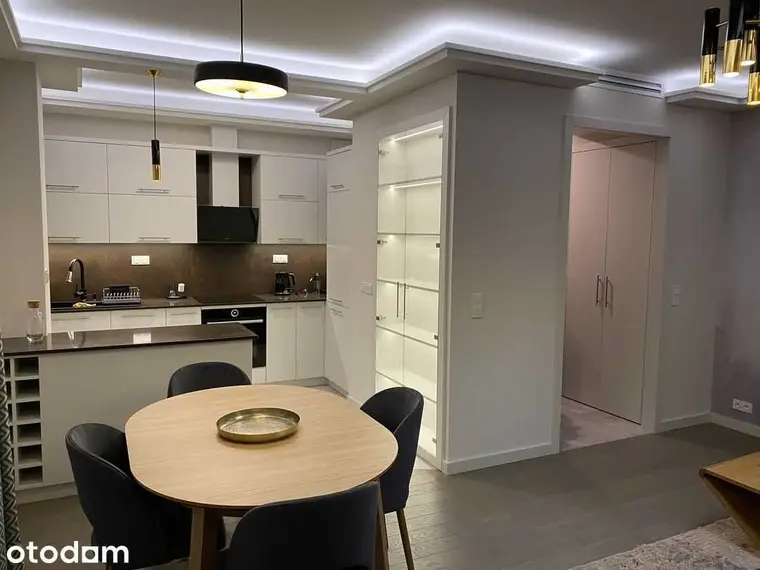
2 rm · 56 m²
5 300 zł/month + fee 1 500 zł
garage includedair conditioningbalcony
An elegant 56 m² apartment on the 11th floor of a building with a reception desk. Air conditioning, balcony, parking.
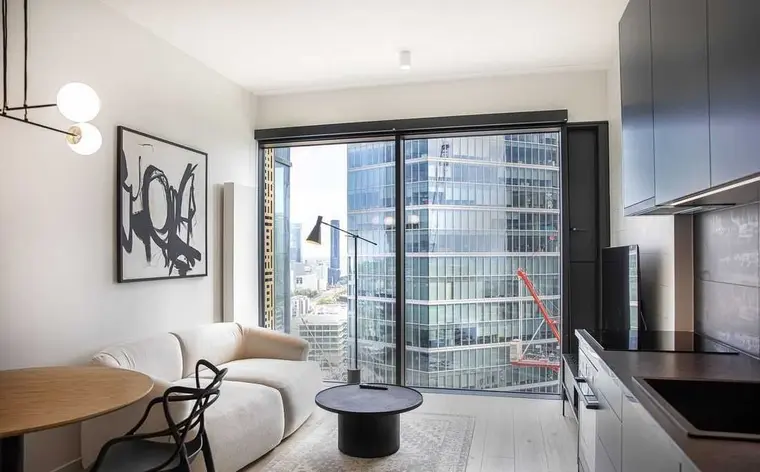
2 rm · 42 m²
5 600 zł/month + fee 1 115 zł
garageair conditioningpets OK
A new 42 m² flat high up in Towarowa Towers: air conditioning, metro around the corner. Available from 1 August.
Common questions
How much does it cost to rent a flat in Wola in 2025?
In autumn 2025 rental rates in Wola average 70–80 zł per m² a month, which for a 30 m² studio means about 2,800–3,600 zł, and for a two-room flat of 45 m² — 4,000–5,500 zł. On top of that come the czynsz administracyjny (building service charge, usually 600–1,000 zł) and utilities settled separately.
How many M2 metro stations are there in Wola?
Four stations on the M2 line operate within Wola: Księcia Janusza, Młynów, Płocka and Rondo Daszyńskiego. This section, opened in stages in 2015 and 2020, made the district one of the most conveniently connected parts of Warszawa and raised the appeal of renting within a few hundred metres of the stations.
Is renting in Wola more expensive than in Śródmieście?
No — according to analyses from 2025 the rates in Wola (70–80 zł/m²) are about 15–20% lower than in Śródmieście (85–95 zł/m²) and close to Mokotów (75–85 zł/m²). Wola nevertheless remains clearly more expensive than outlying districts such as Praga-Południe or Białołęka.
Which large office developments are currently being built in Wola?
Under construction are, among others, the LIXA complex (77,000 m²), The Bridge office tower (47,000 m²), Upper One (approx. 36,000 m², completion planned for 2027) and LightOn at Rondo Daszyńskiego (23,600 m², due by the end of 2028). In total about 150,000 m² of office space is being built there.
What is the maximum deposit when renting a flat in Poland?
Under the act on the protection of tenants' rights the security deposit may not exceed twelve times the monthly rent. In practice in Wola owners most often take the equivalent of one or two months' rent, which at a rate of 4,000–5,500 zł means a deposit of the order of 4,000–11,000 zł.