What documents do you need to rent an apartment in Poland
Which documents to rent an apartment in Poland the tenant and the owner need — the practice in Warszawa: ID, income proof, PESEL, RODO, najem okazjonalny.

To rent an apartment in Poland a tenant needs a valid ID card or passport (foreigners additionally a karta pobytu, the residence card, or a visa) and a document confirming income — most often a certificate of earnings covering the last 3 months, an employment contract shown for inspection or a bank statement. The landlord, in turn, should hold a document confirming legal title to the premises (an extract from the księga wieczysta, the land and mortgage register, or a deed of ownership) and an ID card. For an ordinary tenancy that is practically the full set — no regulation requires more.
If you would rather not search on your own, we can do it for you: apartment search for tenants in Warsaw.
With najem okazjonalny (occasional lease, secured by a notarial submission to enforcement) three further items are added: the tenant’s declaration of submission to enforcement in the form of an akt notarialny (notarial deed, usually costing a few hundred zloty), an indication of a substitute dwelling in Poland and the written consent of its owner. It is worth remembering one rule that both sides often forget: a certificate of earnings or a copy of an employment contract is market practice, not a legal obligation. The tenant may refuse to provide them, and the landlord — under the data minimisation principle of RODO — should not demand more data than is needed to conclude and perform the agreement. Below you will find the full list for both sides, the differences between an employment contract and B2B self-employment, and the specifics of renting to foreigners.
What identity documents are needed to rent an apartment?
Verifying identity is the basis of every tenancy agreement. The landlord has the right to ask to see an ID card or passport and to note down the necessary data from it: first name, surname, PESEL number, series and number of the document. The landlord does not, however, have the right to demand a photocopy of the whole document or to keep it even for a moment — that is excessive data processing within the meaning of RODO.
For foreigners the identity document is the passport, while citizens of the EU and the EEA may also use the ID card of their own country. A PESEL number is not required for an ordinary tenancy — the agreement can use the data from the passport or the karta pobytu. We write more about the PESEL number and the registration obligation in our text on PESEL and registration for foreigners.
How can a tenant document income — employment contract or B2B?

The way income is confirmed depends on the form of employment. People on an employment contract (umowa o pracę) usually submit a certificate from the employer stating net remuneration over the last 3 months, or the contract itself for inspection, preferably an open-ended one or one covering the whole rental period. With civil-law contracts (umowa zlecenie or umowa o dzieło) the PIT-11 or PIT-37 return for the previous year is often a helpful addition, as it shows continuity of income.
Self-employed people (B2B) more rarely have a classic „certificate of earnings” — instead they show a statement from the company bank account covering the last 3 to 6 months, the PIT-36 or PIT-36L return for the previous year and, on request, certificates from ZUS (the social insurance institution) and the tax office confirming no arrears in contributions. Market practice assumes that monthly net income should be at least 2.5 to 3 times higher than the rent — that, however, is a custom, not a legal requirement. A set of documents prepared in advance shortens the search: that is exactly how we guide tenants through the whole rental process, from viewings to signing the agreement.
| Form of income | Basic document | Supporting document |
|---|---|---|
| Employment contract | Certificate from the employer | Bank statement showing incoming payments |
| Umowa zlecenie / o dzieło | Copy of the contract | PIT-11 or PIT-37 for the last year |
| B2B self-employment | Company bank account statement | PIT-36 / PIT-36L, ZUS and tax office certificate |
| Income from another tenancy | Tenancy agreement signed by both parties | Confirmations of payments received over 3 months |
What may a landlord not demand — where are the limits of RODO?
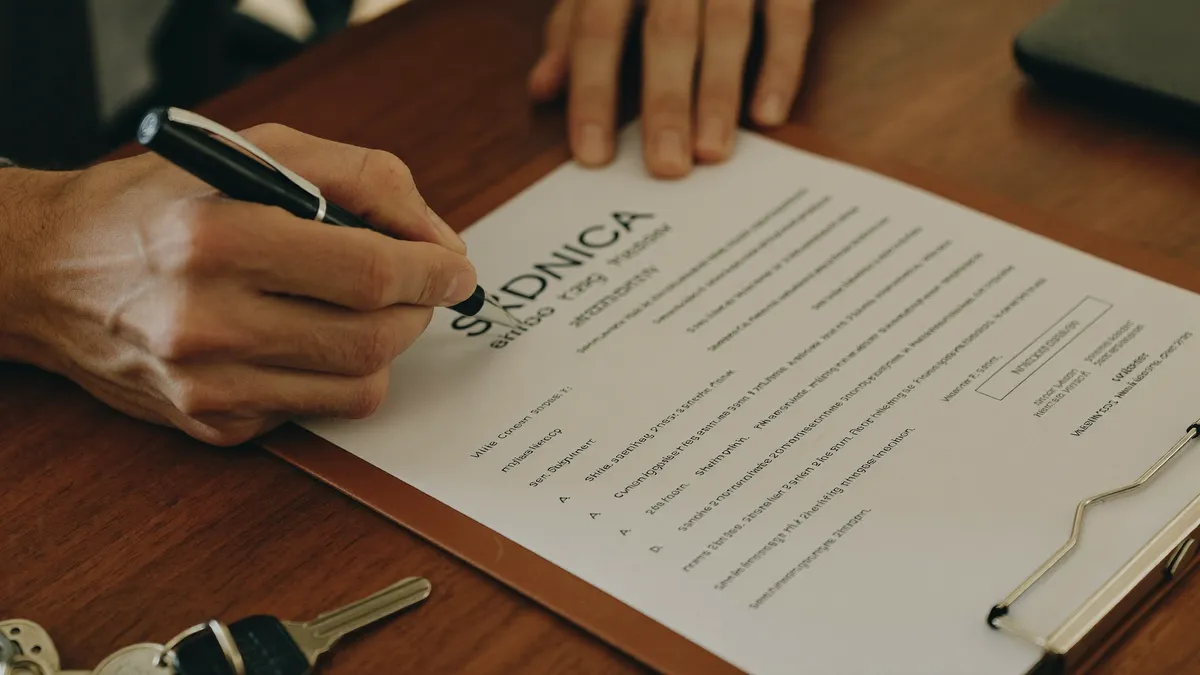
The data minimisation principle (art. 5(1)(c) RODO, in force in Poland since 2018) means that the landlord may collect only the data necessary to conclude and perform the tenancy agreement. At the stage of the first conversation, a first name, surname, contact details and general information about employment are enough — the PESEL number, the ID card data or the bank account number are needed only when the agreement itself is being drawn up.
It is not permissible to ask about health, disability, religion, political views, sexual orientation or family plans — these are special category data under art. 9 RODO, and demanding them in a tenancy context has no justification. Nor does the landlord have the right to check the tenant independently at Biuro Informacji Kredytowej (BIK, the credit information bureau) without their consent — the landlord may only ask the candidate to download their own report (a free copy of the data is available once every 6 months) and show it. If the data being collected goes beyond that framework, the tenant may ask on what legal basis it is requested.
What documents should the landlord prepare?
The documentary duty does not rest on the tenant alone. The landlord should be ready to confirm legal title to the premises — with an extract from the księga wieczysta, a notarial purchase deed or another ownership document — and, when renting out on behalf of another person, additionally with a power of attorney. A conscientious landlord also prepares a draft agreement in two identical copies and a protokół zdawczo-odbiorczy (handover protocol) with meter readings. If you do not want to deal with this yourself, we take that whole part on ourselves as part of our rental management for owners.
It is worth checking the księga wieczysta before signing — the KW number lets you verify whether the person offering the apartment really is the owner and whether the premises are encumbered by a mortgage or a third-party right. We describe how to read such an entry in our text on the land and mortgage register.
What additional documents apply to najem okazjonalny?
Najem okazjonalny is a popular form of protection for the landlord, and it requires a set of additional documents. The key one is the tenant’s declaration of voluntary submission to enforcement and vacating of the premises, which must be drawn up in the form of an akt notarialny — unlike the rest of the agreement, which only has to be concluded in writing. Added to that is an indication of another dwelling in Poland to which the tenant will move in the event of enforcement, and the written consent of the owner of that dwelling for the tenant to live there.
The landlord must also report an occasional lease agreement to the tax office within 14 days from the day the tenancy begins (art. 19b of the act on the protection of tenants’ rights). We describe the full set of rules and document templates in detail in our guide to najem okazjonalny.
What does renting an apartment look like for a foreigner?
Citizens of the EU and the EEA rent an apartment on exactly the same terms as Poles — a passport or the ID card of their country is enough, with no additional permits. Citizens of countries outside the EU should additionally hold a valid residence title: a Schengen or national visa (a stay of up to 90 or 365 days) or a temporary or permanent karta pobytu for a longer stay. Legal residence in itself is not a formal condition for the validity of a tenancy agreement, but in practice landlords almost always ask about it.
A PESEL number is not obligatory for an ordinary tenancy agreement, but it becomes indispensable for najem okazjonalny, because the notary requires it in order to draw up the deed. Obtaining a PESEL number at the municipal office is free of charge, and the procedure usually takes from on the spot up to a few working days. Income earned abroad is worth confirming with a sworn translation into Polish — that is a standard requirement for longer tenancies.
A complete set of documents prepared in advance shortens the search and minimises the risk of a dispute at the start of the tenancy. At allproperty we help to verify the candidate, assemble the necessary certificates and prepare an agreement compliant with the current regulations — including for najem okazjonalny and for renting to foreigners. The commission for handling a rental under the Start model is 70% of one month’s rent, paid once, with no hidden charges. The date for signing an agreement often falls in the evening, after both parties finish work — so if one of the documents is missing at the last moment, or a doubt about a clause comes up, call at any hour: we work 24/7, phone +48 666 866 468.
Common questions
What documents must a tenant show before signing a tenancy agreement?
The tenant should present a valid ID card or passport (foreigners additionally a karta pobytu, the residence card, or a visa) and a document confirming income — most often a certificate of earnings covering the last 3 months, an employment contract or a bank statement. References from a previous landlord are not obligatory, but they increase the credibility of the candidate.
May the landlord ask for a certificate of earnings?
Yes, asking for a certificate of earnings is a widespread market practice and no regulation forbids it, although the tenant has the right to refuse to provide one. In that case income can be confirmed, for example, with a bank statement covering the last 3 to 6 months or with the PIT tax return for the previous year.
What data may a landlord not demand from a tenant under RODO?
Under the data minimisation principle of RODO (the GDPR as applied in Poland since 2018), the landlord should not ask about the tenant's health, religion, political views, sexual orientation or family plans. Nor is the landlord entitled to demand a photocopy of the whole ID card — presenting the document for inspection and noting down the necessary data is enough.
What extra documents are needed for najem okazjonalny?
On top of the standard agreement and identity documents you need the tenant's declaration of voluntary submission to enforcement in the form of an akt notarialny (notarial deed), an indication of a substitute dwelling in Poland and the written consent of its owner for the tenant to live there. A visit to the notary usually costs a few hundred zloty.
Does a foreigner need a PESEL number to rent an apartment in Poland?
No — an ordinary tenancy agreement can be concluded on the basis of a passport or a karta pobytu alone, without a PESEL number. PESEL becomes necessary only for najem okazjonalny, because the notary requires it to draw up the notarial deed on submission to enforcement. Obtaining a PESEL number at the municipal office is free of charge.