Umowa najmu — 10 points you must watch out for
Residential tenancy agreement in Warszawa — 10 points: deposit, notice, rent increases, minor repairs, handover protocol and invalid contractual penalties.

A residential tenancy agreement should clearly regulate ten areas that most often give rise to disputes: duration and rules of termination, the amount and return of the deposit, the procedure for rent increases, the split between minor repairs and renovations, the protokół zdawczo-odbiorczy (handover protocol), consent for pets and subletting, the rules for the owner’s visits, the settlement of utilities and contractual penalties. Under the act on the protection of tenants’ rights, the deposit in an ordinary tenancy may not exceed twelve times the monthly rent (six times with najem okazjonalny), and the owner must return it within one month of the flat being vacated. Standard notice for an open-ended agreement is three months in advance at the end of a calendar month (art. 688 of the Civil Code), and the landlord must announce a rent increase in writing three months ahead. Minor repairs — light bulbs, seals, painting — fall on the tenant, while more serious renovations and the replacement of worn-out installations are financed by the owner. Contractual penalties for early termination of the agreement because of rent arrears are in most cases invalid by operation of law. Below we break each of these points down into specifics, with the legal basis and practical tips — for tenants and landlords in Warszawa.
If you would rather not search on your own, we can do it for you: apartment search for tenants in Warsaw.
How much may the deposit be and when must the landlord return it?
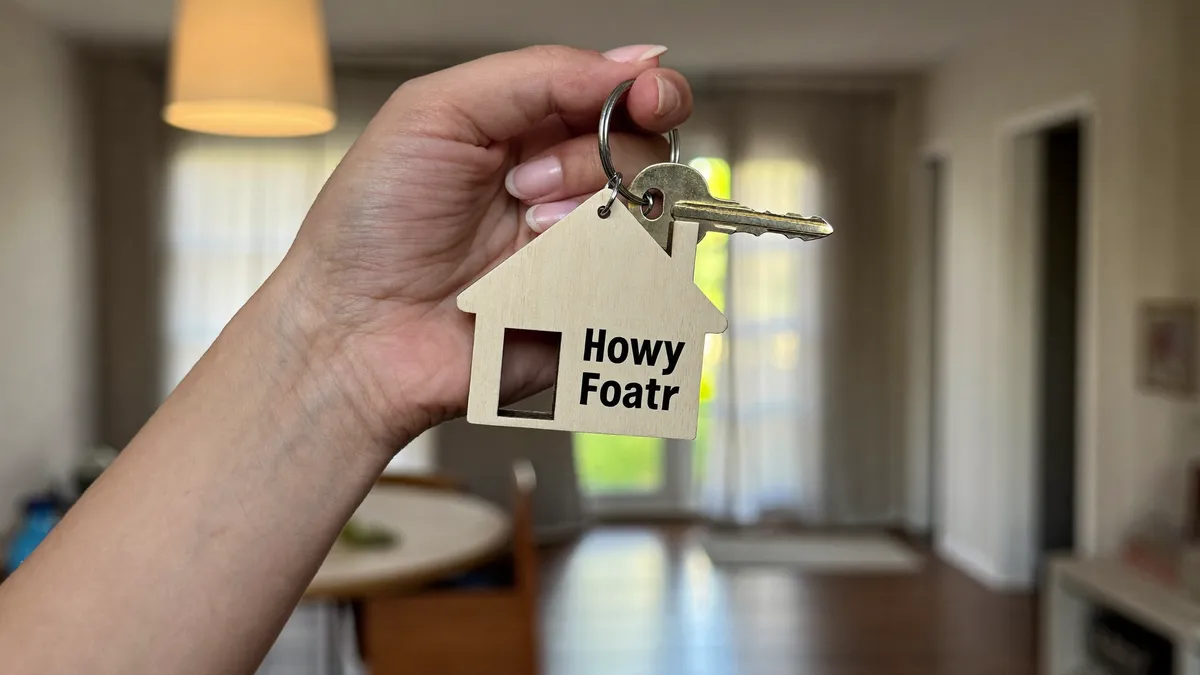
A deposit is not obligatory — it is the owner who decides whether to require one. If so, art. 6 of the act on the protection of tenants’ rights sets an upper limit: with an ordinary residential tenancy it may not exceed twelve times the monthly rent applying on the day the agreement is signed, and with najem okazjonalny or an institutional tenancy — six times. In practice on the Warszawa market the equivalent of one or two months’ rent is most common, and three less often, with higher-standard flats.
The deposit is returned within one month of the day the flat is vacated, after deducting arrears and the cost of repairs going beyond normal wear and tear. The act also provides for indexation: if the rent has risen during the tenancy, the amount returned should reflect the new rate multiplied by the same factor, and not less than the deposit paid in. We describe tenants’ rights in the settlement of the deposit in a separate article: the deposit and tenants’ rights.
What is the standard notice period for a tenancy agreement?

For an open-ended agreement with rent payable monthly the statutory period is three months in advance, taking effect at the end of a calendar month — under art. 688 of the Civil Code, which as a special provision for the tenancy of premises takes precedence over the general one-month rule in art. 673 §2 of the Civil Code. With longer settlement periods — three months in advance at the end of a quarter. The parties may extend these periods in the agreement, but may not shorten them below the statutory minimum to the tenant’s disadvantage.
A fixed-term agreement is stricter in this respect — as a rule it cannot be terminated early, unless the agreement expressly provides for that possibility or exceptional statutory circumstances arise: devastation of the flat, rent arrears of at least three full payment periods after a prior demand for payment, subletting without the owner’s consent or the need for a general renovation of the building. A provision on “termination with three months’ notice” in a fixed-term agreement is sometimes ineffective if it is not based on a specific ground — it is worth checking this before signing.
Can the owner raise the rent during the term of the agreement?

Yes, but only in a defined procedure. Under art. 8a of the act on the protection of tenants’ rights, the owner raises the rent by serving notice of its current level in writing — on pain of invalidity — with at least three months’ notice, taking effect at the end of a calendar month. If the increase over the year exceeds 3% of the replacement value of the flat, the landlord must justify it and, at the tenant’s request, present a calculation within 14 days — otherwise the increase is invalid.
The tenant has two months from receiving the notice to react: they may refuse the new rate in writing, which ends the tenancy when the notice period expires, or challenge the increase in court as unjustified or excessive. We write more about the mechanism and the case law on this in the article rent increase — tenants’ rights.
Who pays for minor repairs and who for renovating the flat?
The boundary is drawn by art. 681 of the Civil Code and the more detailed art. 6b of the act on the protection of tenants’ rights. The tenant bears outlays “connected with the ordinary use of the premises” — minor and cheap in relation to the rent. The landlord bears everything that goes beyond ordinary use, that is structural repairs and the replacement of worn-out parts of installations, regardless of the tenant’s fault.
| Falls on the tenant | Falls on the landlord |
|---|---|
| Replacing light bulbs, fuses, seals | Repair or replacement of the central heating installation, boiler, furnace |
| Minor repairs to locks, handles, fittings | Structural faults, a leaking roof, windows |
| Painting walls and the inner side of doors | Replacement of worn-out built-in furniture and appliances due to natural wear |
| Minor maintenance of sanitary fittings | Repairs necessary for the premises to be fit for the agreed use (art. 663 of the Civil Code) |
If the landlord delays a repair they are obliged to carry out, the tenant may set a deadline and, once it passes without effect, carry out the repair at the owner’s cost. It is worth describing this mechanism expressly in the agreement, to avoid a dispute about who should react and when.
What is the handover protocol for and what should it record?
The protocol is drawn up twice: when the flat is handed over to the tenant and when it is returned at the end of the tenancy. It should contain the readings of the water, electricity and gas meters, a description of the technical condition of walls, floors and installations, a list of the fittings together with their condition, the number of keys handed over and — preferably — photographic documentation. It is the document that in practice settles most disputes about the return of the deposit and about whether a given piece of damage arose through the tenant’s fault or results from ordinary wear and tear. If you come across something unclear as early as the signing of the protocol — an undocumented fault, a disputed meter reading or a discrepancy with the listing — you do not have to wait until morning: the allproperty team answers the phone around the clock, in the evening and at the weekend too, on +48 666 866 468.
The absence of a protocol does not invalidate the agreement, but it decidedly weakens the position of both parties in the event of a dispute — it is then hard to prove in what condition the flat was handed over. We describe the full template and the list of items to check in the article the handover protocol step by step.
May a tenant keep a pet, sublet the flat and let the owner in unannounced?
These are areas in which the rules give the parties a good deal of freedom, so what counts is what has been written into the agreement. Subletting the premises without the owner’s written consent is one of the statutory grounds for terminating the agreement without notice — which is why it always requires express consent. The regulations do not generally prohibit pets, but it is the agreement that decides on what terms the tenant may keep them — it is worth agreeing this explicitly.
The owner’s visits may not take place at any moment — the tenant is entitled to quiet enjoyment of the premises, so a good agreement defines the period of prior notice (e.g. 24–48 hours, apart from an emergency). The same goes for utilities: it is worth separating the rent from the charges for electricity, gas, water and internet and stating whether the settlement is a flat rate or based on meters — a frequent source of misunderstandings.
Which contractual penalties in a tenancy agreement are invalid?
A contractual penalty under art. 483 §1 of the Civil Code may secure only the non-performance or improper performance of a non-monetary obligation. This means that a contractual penalty for delay in paying rent cannot be effectively stipulated — the surrogate for monetary obligations is default interest, and a clause imposing an additional penalty for such delay is invalid by operation of law (art. 58 §1 of the Civil Code).
The courts, including the Court of Competition and Consumer Protection, have repeatedly held to be prohibited also clauses imposing on the tenant a penalty of several or a dozen months’ rent for early termination of the agreement, where the reason for termination was de facto a monetary obligation. A contractual penalty may, on the other hand, effectively secure non-monetary obligations — for example a ban on subletting without consent or the duty to redecorate the flat on return. Before signing an agreement it is worth checking whether the penalty written into it falls within these limits at all.
A well-constructed agreement is the strongest protection for both the owner and the tenant — most court disputes arise from what was left unsaid in a few of the ten points above. If you are looking for a flat to rent in Warszawa or want to prepare and verify an agreement safely as a landlord, the allproperty team helps at every stage — from selecting the tenant to the handover protocol. There is more on the page for owners, and if a disputed clause lands on you an hour before signing, call at any time: +48 666 866 468.
Common questions
What is the maximum deposit when renting a flat?
With an ordinary tenancy the deposit may not exceed twelve times the monthly rent, and with najem okazjonalny (occasional tenancy) or institutional tenancy — six times, calculated at the rate applying on the day the agreement was concluded. In practice in Warszawa owners most often take the equivalent of one or two months' rent. The landlord must return it, after any deductions, within one month of the flat being vacated.
What is the standard notice period for an open-ended tenancy agreement?
With rent payable monthly it is three months in advance, taking effect at the end of a calendar month (art. 688 of the Civil Code, a special provision for the tenancy of premises). With longer settlement periods — three months in advance, at the end of a quarter. A fixed-term agreement may be terminated early only for reasons stated expressly in the agreement or in statute.
How far in advance must the owner announce a rent increase?
The increase must be served on the tenant in writing with at least three months' notice, on pain of invalidity, taking effect at the end of a calendar month. Within two months of receiving the notice the tenant may refuse the new rate in writing, which ends the tenancy, or challenge the increase in court as unjustified.
Who pays for minor repairs in a rented flat?
Under art. 681 of the Civil Code and art. 6b of the act on the protection of tenants' rights, the tenant bears minor repairs connected with ordinary use: light bulbs, seals, locks, painting walls, minor maintenance of sanitary and electrical installations. More serious renovations, structural faults and the replacement of worn-out parts of installations are the owner's obligation.
Is a contractual penalty for early termination of a tenancy agreement valid?
If it concerns rent arrears or another monetary obligation — as a rule no, because art. 483 §1 of the Civil Code allows contractual penalties to be stipulated only for the non-performance of non-monetary obligations. The courts, including the Court of Competition and Consumer Protection, have repeatedly held such clauses in tenancy agreements to be prohibited and invalid by operation of law.