How much does renting an apartment in Warszawa cost in 2026? Current rates by district
How much renting an apartment in Warszawa costs in 2026: rates for studios and 2- and 3-room flats, differences between districts and the full cost of renting.

How much does renting an apartment in Warszawa cost? As of August 2026: a studio costs an average of 2,650–2,700 PLN a month, a 2-room apartment 3,500–3,700 PLN and a 3-room one 4,300–4,900 PLN. The median asking rate for the whole city is about 3,300–3,500 PLN, the average about 3,900–4,000 PLN. To each of these amounts you will add the czynsz administracyjny (building administration fee) and utilities, together usually 450–1,500 PLN a month, so the realistic budget for a two-room flat is about 4,200–5,000 PLN. Warszawa remains the most expensive rental market in Poland — rates per square metre (about 85–86 PLN/m², as of August 2026) are roughly 30% higher than in Kraków or Wrocław. Rents are currently rising by 4–6% year on year, and the peak of demand falls in August and September. Below you will find specific rates by district, the full cost of renting beyond the rent itself, and what the act says about the deposit and the contract.
If you would rather not search on your own, we can find a rental for you.
What is the rent in Warszawa — status as of August 2026?
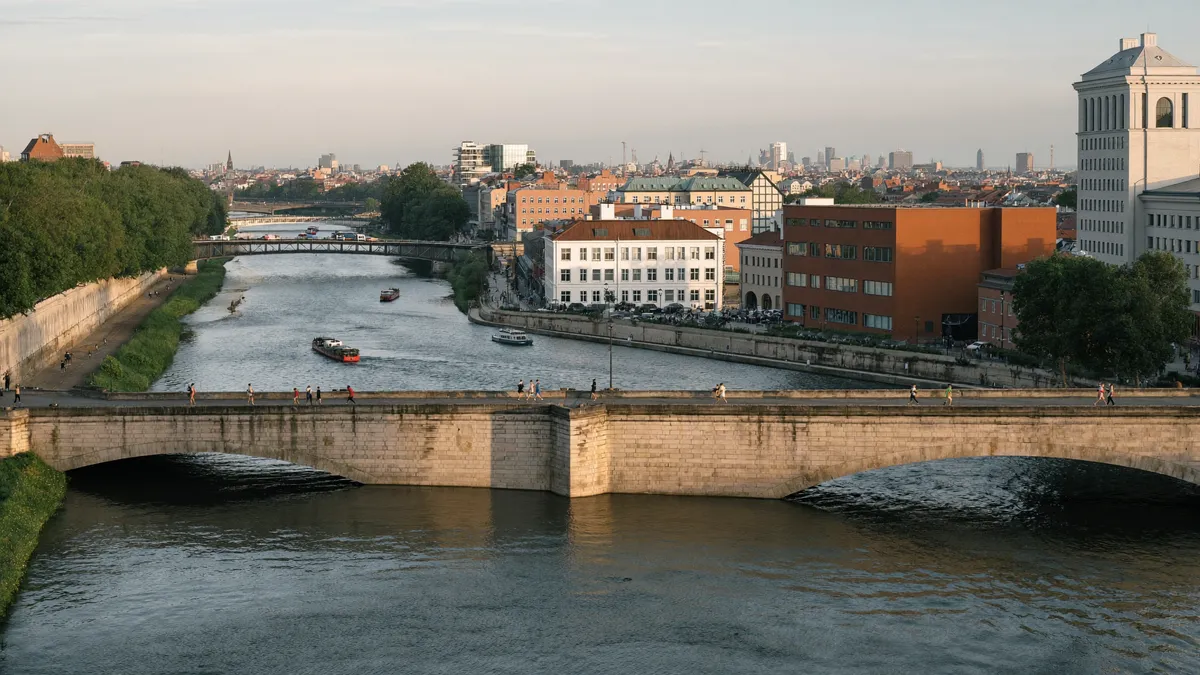
Data from listing portals and transaction reports for July and August 2026 add up to a consistent picture:
- Studio (on average 28–32 m²): 2,650–2,700 PLN/month on average according to transaction data from August 2026;
- 2-room apartment (about 46 m²): 3,500–3,700 PLN on average, median about 3,400 PLN;
- 3-room apartment: 4,300–4,900 PLN/month;
- Premium segment (new apartment buildings with air conditioning, a garage and a reception — Mokotów, Wola, Śródmieście, Wilanów): 5,200–6,000 PLN and above.
An important caveat: the amounts above are the rent, that is what goes to the owner. Administration charges and utilities are paid separately — and they can change the whole bill, as we show in a moment.
Which districts are the most expensive and where will you pay less?
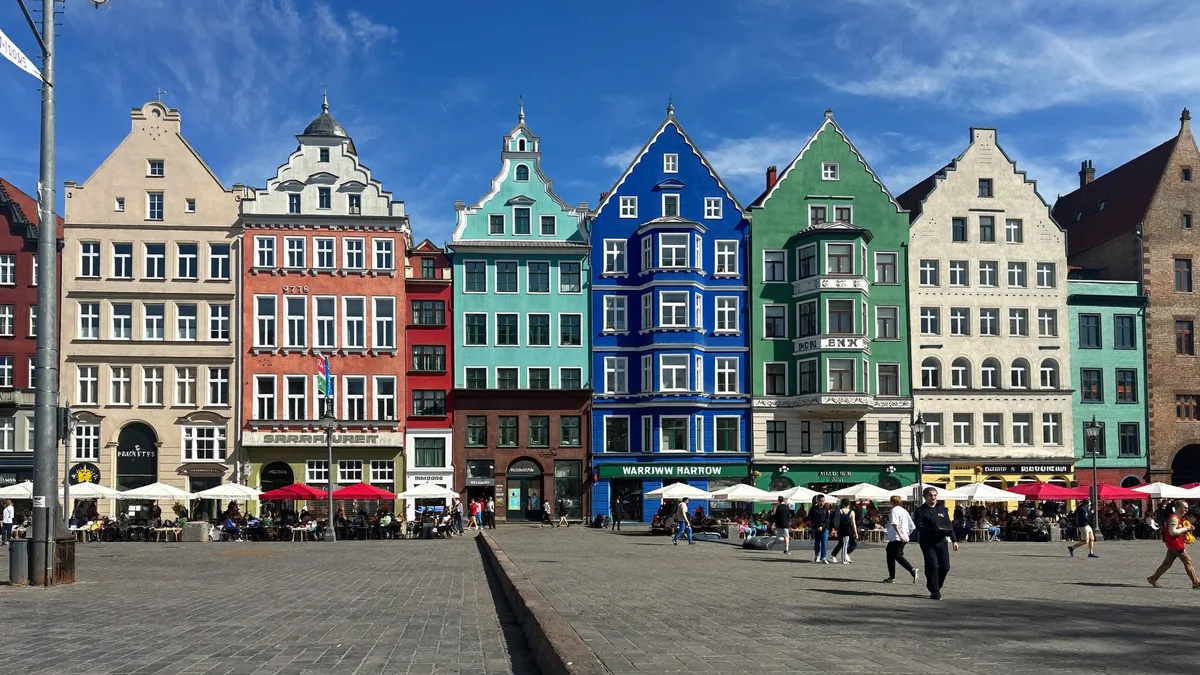
The differences between districts run to several hundred and, in extreme cases, several thousand złoty for a similar size. Indicative asking ranges for 2-room apartments (as of summer 2026):
| District | 2 rooms (PLN/month) |
|---|---|
| Śródmieście, Powiśle | 5,500–7,500 |
| Mokotów | 5,000–6,500 |
| Praga-Południe | 3,500–4,800 |
| Bemowo | 3,000–3,800 |
| Białołęka | 2,800–3,500 |
Per square metre the most expensive areas are the strict centre of Śródmieście, Mokotów (about 90 PLN/m²) and Żoliborz (about 84 PLN/m²). In Białołęka the average rate is about 68 PLN/m² — and it is there, as well as in Ursus and Rembertów, that you will find the cheapest offers. You do, however, have to add the time and cost of commuting. A curiosity from the beginning of 2026: interest in Bielany grew markedly — the metro gives a fast connection to the centre and rates are lower than in neighbouring Żoliborz.
What does renting really cost beyond the rent itself?
To the rent you will usually add the czynsz administracyjny and utilities — together 450–1,500 PLN a month, depending on the size, the standard of the building and the heating season. The median for administration charges alone in Warszawa listings is about 850 PLN (as of August 2026). An example: a 2-room apartment for 3,500 PLN with administration charges of 650 PLN and utilities of about 350 PLN really costs about 4,500 PLN a month.
When moving in you need more cash at once: the first rent (3,500 PLN), the deposit — most often the equivalent of one month (3,500 PLN) — and any agency commission. At allproperty the rental commission is 70% of one month’s rent, that is 2,450 PLN in this example. In total it is worth having about 9,450–9,700 PLN put aside at the start.
What deposit can the owner take and what does the act provide for?
Residential rental is governed by the act of 21 June 2001 on the protection of tenants’ rights, the municipal housing stock and amendments to the Civil Code. Three rules are worth knowing by heart:
- The deposit has a statutory limit. Under an ordinary lease it may not exceed 12 times the monthly rent (art. 6 para. 1), and under najem okazjonalny (occasional lease) 6 times (art. 19a). In practice the Warszawa standard is one, more rarely two monthly rates — the median deposit in listings is about 4,200 PLN (as of August 2026).
- The deposit is refundable within a month of the day the unit is vacated, less documented amounts owed to the owner.
- Najem okazjonalny additionally requires a declaration by the tenant submitting to enforcement in the form of an akt notarialny (notarial deed) and an indication of premises to which they could move out after the contract ends; the owner has 14 days from the start of the lease to report the contract to the head of the tax office.
Whatever the type of contract, make sure there is a protokół zdawczo-odbiorczy (handover protocol) with meter readings and photographs of the apartment — it is what later settles any disputes over the return of the deposit.
How to settle the tax on renting out your own apartment?
You settle private rental under the ryczałt on registered revenue: 8.5% up to 100,000 PLN of revenue a year and 12.5% on the excess above that threshold (as of 2026). At a rent of 3,500 PLN a month this gives 42,000 PLN of revenue and 3,570 PLN of tax a year. It is worth factoring this into the rate from the outset — trying to “recoup” the tax with an inflated rent usually ends in a longer vacancy, which costs more than the tax itself.
Will rental prices in Warszawa keep rising?
After the double-digit increases of 2022–2023 the market has stabilised: rents are currently rising by 4–6% year on year. The first quarter of 2026 brought a seasonal fall in demand and a larger supply of offers, and rates nevertheless rose slightly — which shows how strong baseline demand is in the capital.
Now the hottest period begins: August and September mean the return of students and new employment contracts, so listings disappear fastest precisely in summer. At the beginning of August 2026 the time needed to absorb the entire available rental offer in Warszawa fell from more than three weeks in mid-July to just under 18 days, and vacancies are holding at a low level of 3–5%. The practical conclusion: if you see a fairly priced apartment in a good location, do not put the decision off for several weeks — at the peak of the season it will not wait.
How to look for an apartment without overpaying?
- Set a total budget, not just the rent: add administration charges, utilities and internet. A safe limit is about 30–35% of net income for the full housing cost.
- Compare the rate per square metre, not the asking price alone — 3,400 PLN for 52 m² in Praga-Południe (about 65 PLN/m²) is objectively a better offer than 3,200 PLN for 38 m² in a weaker standard (about 84 PLN/m²).
- Ask about every component of the charges before the viewing: the amount of the czynsz administracyjny, the advances for water and heating, the way overpayments and underpayments are settled.
- Read the contract before signing: the notice period and conditions, the rules on rent increases, the amount of the deposit, the attached protokół zdawczo-odbiorczy — in our support for tenants we go through these points together with you before you sign.
- Negotiate on a longer lease — with a 24-month contract it is easier to obtain a discount of 100–200 PLN than with a one-year one, because the owner gains certainty of income without gaps between tenants.
Looking for a verified apartment to rent in Warszawa? In the allproperty catalogue you will find offers with real photographs and full prices — no hidden charges, with a contract in Polish, Russian or Ukrainian. The rental commission is 70% of one month’s rent. If you have questions about a particular district, write to us — we will suggest where your budget will go furthest. Came across a good offer in the evening or at the weekend? With 18 days needed to absorb the entire rental offer, good apartments go quickly — we work around the clock, call at any time: +48 666 866 468.
Common questions
How much does renting a studio in Warszawa cost in 2026?
According to transaction data from August 2026, the average rate for a studio in Warszawa is about 2,650–2,700 PLN a month. On top of that come the czynsz administracyjny (building administration fee) and utilities, so the realistic budget is usually 3,300–3,600 PLN. In Białołęka and Targówek you will find offers from about 2,200–2,400 PLN; in Śródmieście you will pay noticeably more.
How much is the deposit when renting an apartment in Warszawa?
The Warszawa standard is a deposit equal to one month's rent — the median in listings from August 2026 is about 4,200 PLN. The statutory limit is 12 times the rent under an ordinary contract and 6 times under najem okazjonalny. The owner must return the deposit within a month of the unit being vacated, less any documented amounts owed.
What charges have to be added to the rent?
Besides the rent you pay the czynsz administracyjny (the median in Warszawa listings is about 850 PLN, as of August 2026) plus utilities and internet — together usually 450–1,500 PLN a month. A 2-room apartment advertised at 3,500 PLN therefore really costs about 4,500 PLN. Always ask for the full list of charges before the viewing.
How fast are rental prices in Warszawa rising in 2026?
After the double-digit increases of 2022–2023 the market has stabilised: in 2026 rents are rising by about 4–6% year on year. The seasonal peak falls in August and September — at the beginning of August 2026 the time needed to absorb the entire rental offer in Warszawa fell to just under 18 days.
What tax does an owner pay on renting out an apartment?
Private rental is settled under the ryczałt on registered revenue: 8.5% up to 100,000 PLN of revenue a year and 12.5% on the excess above that threshold (as of 2026). At a rent of 3,500 PLN a month the annual revenue is 42,000 PLN and the tax amounts to 3,570 PLN a year.