Apartment for rent in Praga-Południe — a guide to the district
Apartment for rent in Praga-Południe in Warszawa: prices in Grochów, Gocław, Kamionek and Saska Kępa, commuting, parks and how to look for a listing.
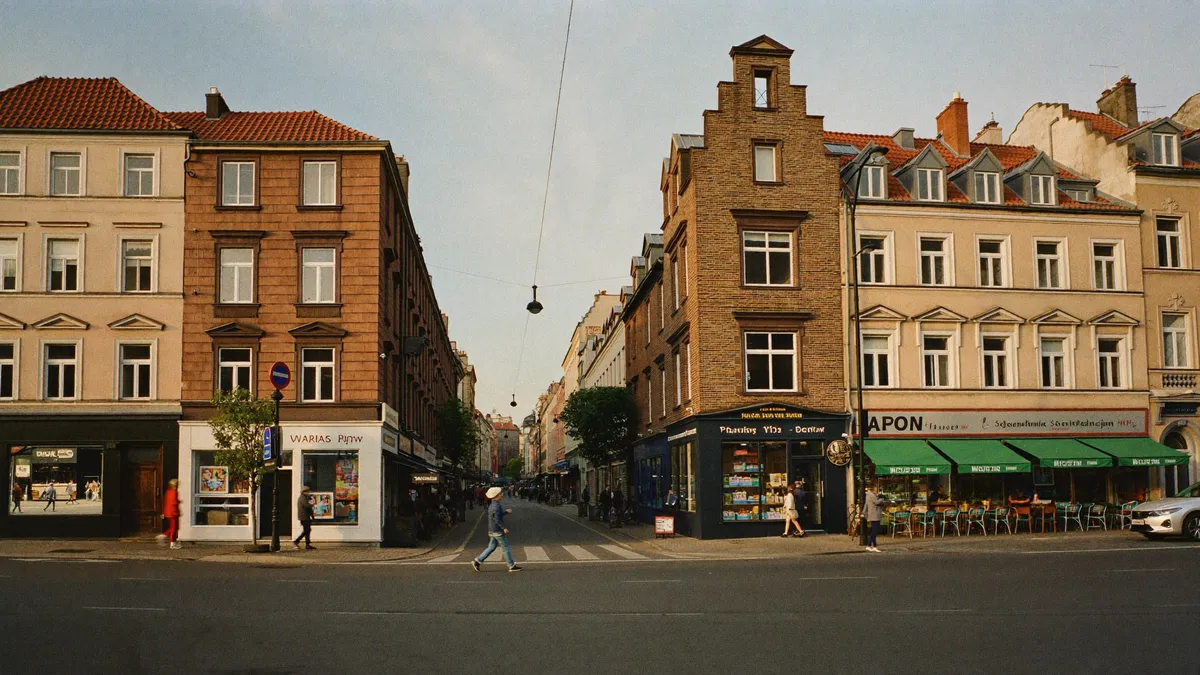
Renting an apartment in Praga-Południe cost on average 76 PLN per m² a month in Q3 2025, and the median total rent came to 3,200 PLN (Adresowo.pl data). For a studio you should expect an outlay of 2,400-3,200 PLN, for a two-room apartment 3,400-4,500 PLN, and for a three-room one 4,800-6,500 PLN — with Saska Kępa and Kamionek tending to be clearly more expensive than Grochów or Gocław. The district is one of the largest in Warszawa and divides into several very different micro-areas: villa-lined Saska Kępa, densely built-up Grochów, estate-style Gocław along the Wisła, and gentrifying post-industrial Kamionek — which is why the choice of a specific street counts for more here than the name of the district itself.
How much does it cost to rent an apartment in Praga-Południe in 2025?
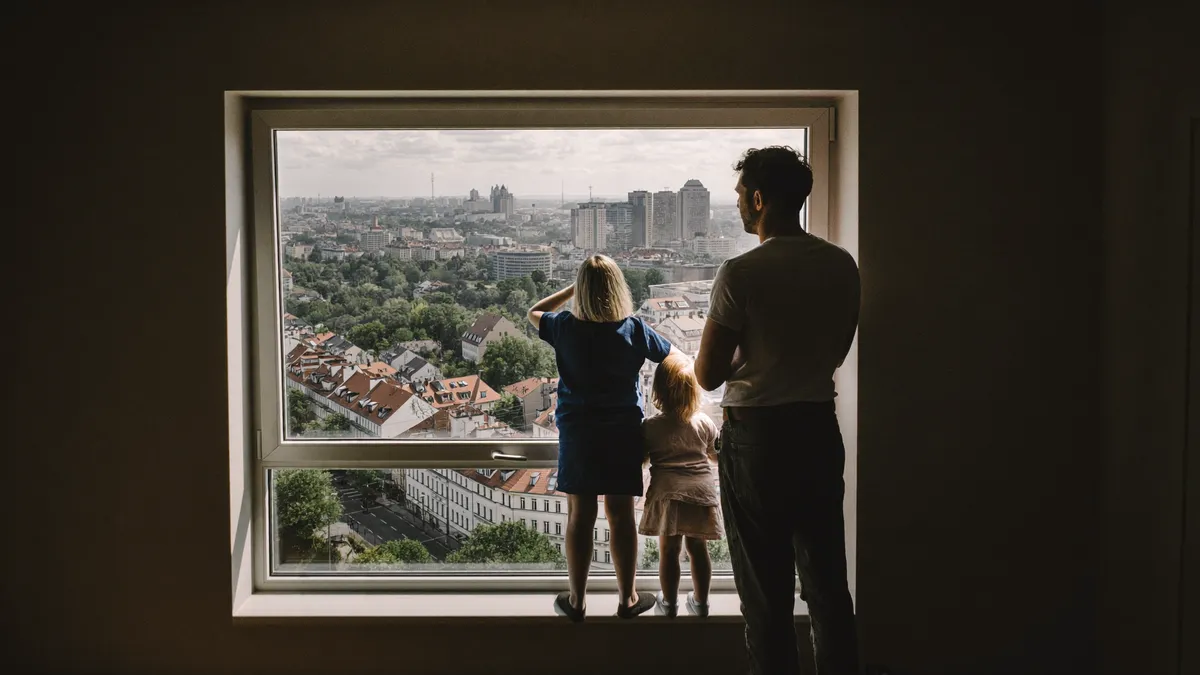
Rates differ depending on the portal and the season, but the direction is consistent — Praga-Południe sits in the middle of the Warsaw ranking, cheaper than Śródmieście or Wola, but more expensive than the peripheral districts. Listings active on the advertising portals in autumn 2025 give the following price picture:
- studio 25-32 m² — approx. 2,400-3,200 PLN a month,
- 2-room apartment 40-55 m² — approx. 3,400-4,500 PLN a month,
- 3-room apartment 60-75 m² — approx. 4,800-6,500 PLN a month, more near Stadion Narodowy and in Saska Kępa.
On top of each of these amounts comes the czynsz administracyjny (the administrative fee paid to the building’s cooperative or owners’ association, usually 500-900 PLN, depending on the age of the building) and utilities settled separately by meter readings. Gratka.pl indicates that in autumn 2025 the average rent for an apartment in Praga-Południe was approx. 4,700 PLN at an average floor area of approx. 58 m², with several hundred active listings — which confirms that the market here is deep and liquid. It is worth comparing these rates with neighbouring districts in the review of renting in Wola, where prices are higher by more than ten percent.
How do the micro-areas of Praga-Południe differ: Saska Kępa, Grochów, Gocław and Kamionek?
Formally Praga-Południe is one of Warszawa’s 18 auxiliary units, but in practice it functions as a collection of separate estates with completely different characters. The table below organises the most important differences:
| Micro-area | Character | What to watch out for |
|---|---|---|
| Saska Kępa | Villas, ulica Francuska, close to the Wisła and the park | High prices, limited parking |
| Grochów | Dense development, tram network, everyday services | Noise on the main streets, older buildings |
| Gocław | Extensive prefabricated-concrete estates along the Wisła (~60 thousand residents) | No rail transport, longer commute |
| Kamionek | Post-industrial area gentrifying around Soho Factory | Close to the metro and Stadion Narodowy, one of the more expensive areas |
Gocław further divides into the sub-estates Orlik, Jantar, Iskra, Wilga and Przyczółek Grochowski — this is where the largest number of apartments in prefabricated concrete blocks is concentrated, valued for their proximity to Jeziorko Gocławskie and the greenery, but criticised for the absence of a metro and rail. Kamionek, in turn, is today an address for people who value a loft atmosphere and a fast metro commute — the new development around Soho by Yareal or Feniks is driven precisely by its proximity to the Stadion Narodowy station.
What is commuting to Praga-Południe like — metro, trams, buses?

The M2 metro touches Praga-Południe with just one station at the district boundary — Stadion Narodowy, which serves Kamionek and the northern sliver of the area, giving a fast connection to the left bank of the Wisła. The rest of the district, meaning most of Grochów, the whole of Saska Kępa and the whole of Gocław, remains without rail transport and relies on a dense network of trams (routes along Grochowska, aleja Waszyngtona and ulica Saska) and ZTM buses. The key interchange nodes are Rondo Waszyngtona, the stops by the Poniatowski bridge and the area around Dworzec Wileński, where tram and bus lines connect with the M2 metro.
Getting to the centre by car or public transport runs mainly across the Poniatowski, Łazienkowski or Świętokrzyski bridges and takes roughly 15-35 minutes depending on the destination and the time of day. The biggest transport challenge remains Gocław — a tram line to this estate has been planned for years, but has still not been built, so the residents of this estate of nearly 60 thousand people rely exclusively on buses. Anyone for whom commuting time is a priority should check the exact timetable and frequency of the lines in the current WTP schedule before signing a rental contract.
What is the infrastructure like — parks, schools and shopping in Praga-Południe?
The district stands out within Warszawa for the amount of greenery. The largest is Park Skaryszewski im. Ignacego Paderewskiego (58 ha, laid out in 1905-1922), with Jezioro Kamionkowskie, which together with Kamionkowskie Błonia Elekcyjne forms nearly 80 ha of one of the largest green enclaves in the city. It is complemented by Park Polińskiego on ulica Szaserów, revitalised in 2015-2016, and Park im. płk. Jana Szypowskiego „Leśnika”.
In retail terms the dominant venue is Centrum Handlowe Promenada on Ostrobramska (approx. 90,000 m² of retail and service space, a Cinema City cinema), complemented by Centrum Handlowe King Cross on Jubilerska, the Rondo Wiatraczna gallery on Grochowska and Centrum Handlowe Gocław. Fans of local shopping can choose between the Szembeka and Wiatraczna markets. The district also has a network of public libraries and educational institutions spread across all the micro-areas, although their availability is worth checking individually for a specific address, especially in Gocław, where the large number of residents translates into heavier use of these facilities.
Who is Praga-Południe for?
The district works above all for people looking for a compromise between price and proximity to the centre, and for those who value greenery and a view of the Wisła more than having a metro entrance outside the door. Saska Kępa attracts families and people who value intimate, villa-style architecture and walks along the river. Kamionek is the natural choice for people working around Stadion Narodowy and left-bank Śródmieście who care about a fast metro. Gocław works for families looking for a larger floor area at a lower price than closer to the centre, provided they accept a longer bus commute. Grochów remains the most universal choice — close to trams and services, and at a reasonable price.
How to look for an apartment for rent in Praga-Południe?
With such a varied district it is worth starting the search by choosing a specific micro-area, and only then filtering listings by floor area and price — an advertisement described as “Praga-Południe” without a precise address may in practice mean anything from a few minutes from the Stadion Narodowy metro to a quarter of an hour by bus from the nearest stop in Gocław. Before signing a contract it is worth assembling the documents needed to rent an apartment and checking carefully the technical condition of the unit and the amount of the deposit. Current listings from across Praga-Południe and the other districts of Warszawa, with filters by floor area, price and micro-area, can be found in the allproperty apartment catalogue.
If you are looking for an apartment in Praga-Południe and want to narrow the choice quickly between Saska Kępa, Gocław, Grochów and Kamionek, or to arrange a viewing of a specific listing, the allproperty team is available 24/7 on +48 666 866 468 — we will advise which micro-area fits your lifestyle and commute before you decide to sign a contract. You will find more about the rental process itself and tenants’ rights in the section for tenants.
Common questions
How much does it cost to rent an apartment in Praga-Południe?
According to Adresowo.pl the median rate in Q3 2025 was approx. 76 PLN/m², and the median total rent 3,200 PLN. In practice a studio costs approx. 2,400-3,200 PLN, a 2-room apartment 3,400-4,500 PLN, and a 3-room one 4,800-6,500 PLN a month, with Saska Kępa and Kamionek tending to be more expensive than Grochów and Gocław.
Is there a metro in Praga-Południe?
Only partly — the M2 line touches the district with a single station, Stadion Narodowy, serving Kamionek and the northern edge. Saska Kępa, most of Grochów and the whole of Gocław (approx. 60 thousand residents) have no rail transport and rely on trams and buses running along aleja Waszyngtona, aleja Zieleniecka and ulica Grochowska, among others.
Which sub-area of Praga-Południe should I choose for renting?
Saska Kępa means villa architecture and ulica Francuska, but limited parking and higher prices. Grochów offers a dense tram network and everyday services. Gocław has large estates with greenery along the Wisła, but no rail transport. Kamionek is gentrifying around Soho Factory and the Stadion Narodowy metro station.
What parks and green areas are there in Praga-Południe?
The largest is Park Skaryszewski im. Paderewskiego (58 ha) with Jezioro Kamionkowskie, which together with Kamionkowskie Błonia Elekcyjne forms nearly 80 ha of greenery. In addition there are Park Polińskiego on Szaserów (revitalised in 2015-2016) and Park im. Szypowskiego „Leśnika”.
What is the maximum deposit when renting an apartment in Poland?
Under the tenant protection act the deposit may not exceed twelve times the monthly rent. In Praga-Południe, at rates of 2,400-6,500 PLN, owners most often take the equivalent of one or two months' rent, which in practice means from approx. 2,400 to 13,000 PLN, depending on floor area and standard.