Apartment for rent in Ursynów — a guide to the district
Apartment for rent in Ursynów, Warszawa: prices of studios and 2–3-room flats, the Kabaty, Stokłosy and Natolin sub-areas, the M1 metro and infrastructure.

Renting an apartment in Ursynów in August 2024 usually meant 2,500–3,500 PLN for a studio, 3,200–4,500 PLN for a 2-room apartment and 4,500–6,500 PLN for a 3-room one — plus a czynsz administracyjny (building maintenance fee) of the order of 500–800 PLN per month. Ursynów is one of the largest and greenest districts of Warszawa, divided into 13 estates, five of which lie directly by the M1 metro stations (Ursynów, Stokłosy, Imielin, Natolin, Kabaty). It is precisely the distance from the metro lift, and not the district name itself, that most strongly differentiates rental rates — an apartment 5 minutes from Kabaty can cost noticeably more than an identical floor area by Puławska, from where you have to take a bus to the metro.
Below we show what the prices look like broken down by floor area, how the individual sub-areas differ, how transport works here and who Ursynów suits best.
How much does it cost to rent an apartment in Ursynów?
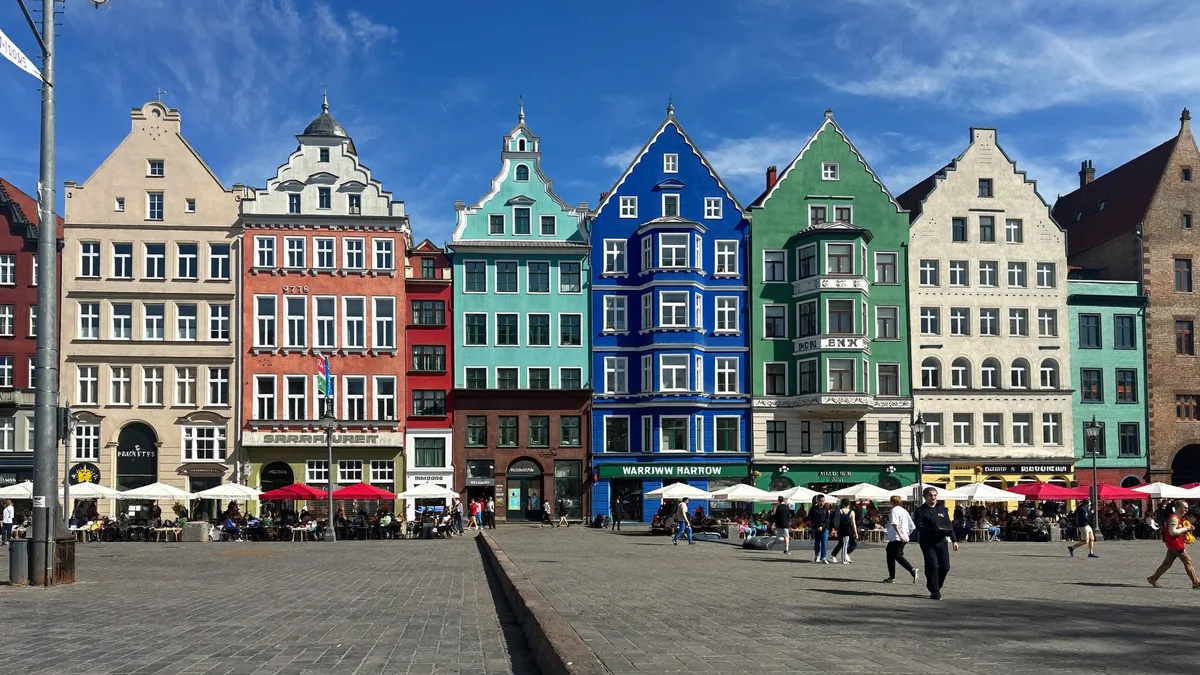
Rental prices in Ursynów depend above all on three factors: the distance from the metro station, the standard of the building (1980s large-panel blocks vs newer developer investments) and the estate. In listings from 2024/2025, studios of 25–40 m² were usually rented out for 2,500–3,500 PLN of rent, to which you have to add the czynsz administracyjny — for a 40 m² apartment that is about 700–800 PLN per month.
| Floor area | Rent (indicative) | Czynsz administracyjny |
|---|---|---|
| Studio 25–35 m² | 2,500–3,200 PLN | 500–650 PLN |
| 2 rooms 40–50 m² | 3,200–4,500 PLN | 650–850 PLN |
| 3 rooms 55–70 m² | 4,500–6,500 PLN | 800–1,100 PLN |
Apartments in newer investments in the Jeziorki or Wyczółki area usually have a higher czynsz administracyjny (lift, security, common areas), but lower heating costs than large-panel apartments in Stokłosy or Stary Imielin. You will find a broad overview of prices across the whole city, not just in Ursynów, in the article rental prices in Warszawa in 2026.
What are the sub-areas of Ursynów and how do they differ?

Ursynów is formally divided into 13 estates: Dąbrówka, Grabów, Jeziorki Północne, Jeziorki Południowe, Kabaty, Natolin, Pyry, Skarpa Powsińska, Stary Służew, Stary Imielin, Ursynów-Centrum, Ursynów Północny and Wyczółki. In practice residents use a simpler division into the “high Ursynów” — the dense multi-family development in the northern, eastern and central parts — and the “green Ursynów”, that is the belt of single-family housing along Puławska in the western part of the district.
- Kabaty — the best-known estate, directly by Las Kabacki and the Kabaty metro station; a valued family location, higher rents.
- Stokłosy (part of Ursynów Północny, together with Jary and Koński Jar) — dense 1980s development, close to the Stokłosy metro station and the SGGW campus.
- Natolin and Imielin — the central part of the district, good transport links, mixed standard of buildings.
- Jeziorki and Wyczółki — newer developer investments in the south, further from the metro, more often chosen by families looking for a larger floor area.
We write in more detail about what exactly sets one of the most recognisable estates apart from the rest of the district in the article Kabaty — how it differs from the rest of Ursynów.
What is the commute like by metro, tram and bus?

No trams run through Ursynów — the main transport axis of the district is the M1 metro line, which has five stations here: Ursynów, Stokłosy, Imielin, Natolin and Kabaty (the terminus). The whole line counts 21 stations and trains run from around 5:00 until midnight (longer on Fridays and Saturdays), with a frequency of 2–4 minutes at peak times. From Kabaty to the Centrum station the metro takes about 20–22 minutes, which for many tenants is the main argument for choosing this district despite its peripheral position on the city map.
The western part of Ursynów along Aleja Komisji Edukacji Narodowej and Puławska street is served by a dense network of city buses that take you to the nearest metro station. It is worth checking this before signing a contract — an apartment “in Ursynów” without a specific street given can mean either 5 minutes or 20 minutes to the nearest station.
What is the infrastructure like — parks, schools, shops?
Ursynów is one of the greenest districts of Warszawa thanks to the proximity of the Stefan Starzyński Las Kabacki, Park Natoliński with its historic palace and the Botanical Garden in Powsin. For families the extensive network of nurseries, kindergartens and primary schools also matters — for years the district has been one of those where the number of educational facilities keeps pace with the number of residents, although enrolment at the most sought-after schools is worth planning in advance.
Everyday shopping is covered by shops along Aleja KEN and by shopping centres in the Ursynów area and in neighbouring Mokotów. The district is also home to the SGGW campus and some faculties of the University of Warsaw, which translates into steady rental demand among students — especially in the Stokłosy and Ursynów-Centrum area.
Who is Ursynów for?
Ursynów works above all for families with children who value greenery, playgrounds and schools within walking distance, and at the same time need a fast metro commute to the centre. It is also a good choice for students of SGGW and the nearby universities, and for people working in the Mokotów Służewiec area, from which the commute from Ursynów is short. People looking for nightlife and dense inner-city development will more often choose Śródmieście or Wola — you will find a comparison of districts in terms of lifestyle in the article on the best districts for families with children.
How do you look for an apartment to rent in Ursynów?
When looking for an apartment it is worth immediately checking the exact address relative to the nearest metro station, and not just the name of the estate — this is the most common cause of disappointment after signing a contract. How the whole path from the first viewing to the handover of keys works in practice is explained in the section for tenants. Before signing a rental contract, also check which documents are normally required and how the deposit works — we described this in the articles documents for renting an apartment and the deposit and tenant rights. You will find the current offer of apartments in Ursynów and other districts of Warszawa in the allproperty catalogue, and if you are letting an apartment yourself, take a look at the page for owners too.
The choice between Kabaty, Stokłosy and Jeziorki is often a decision worth several hundred zloty a month and a dozen-odd minutes of commuting — and such nuances are not visible in the photos in a listing. If you are looking for an apartment to rent in Ursynów and want to verify quickly whether a given address is genuinely close to the metro or only close on the map, call allproperty — we are available 24/7, including in the evening and at the weekend, on +48 666 866 468.
Common questions
How much does it cost to rent an apartment in Ursynów?
A studio is usually 2,500–3,500 PLN plus a czynsz administracyjny (building maintenance fee) of 500–800 PLN, a 2-room apartment 3,200–4,500 PLN, and a 3-room one 4,500–6,500 PLN. The final price depends on the distance from the M1 metro and the finishing standard — indicative figures from 2024/2025 listings.
Which part of Ursynów is closest to the metro?
Closest to the M1 stations lie Stokłosy, Imielin, Natolin and Kabaty — there it is usually a 5–10 minute walk to the metro lift. The western part of the district along Puławska is further from the metro and requires a bus or tram ride.
How do Kabaty differ from Stokłosy?
Kabaty is a green, quieter estate by Las Kabacki, with a higher standard in part of its building stock and higher rents. Stokłosy is a more densely built, more urban fragment of Ursynów Północny, closer to the centre of the district and to the SGGW university.
Can you get to Ursynów by tram?
No — no trams run through Ursynów; the main transport axis is the M1 metro line (the Ursynów, Stokłosy, Imielin, Natolin and Kabaty stations), supplemented by a network of city buses along Aleja KEN and Puławska street.
Who is renting in Ursynów best suited to?
The district works well for families with children, students of SGGW and UW (the Ochota campus is within metro reach) and people who value greenery and quiet with a good metro commute to the centre, usually 20–25 minutes to Centrum.