An apartment in Sadyba — how it differs from the rest of Mokotów
Apartment in Sadyba, Warszawa: prices 16,000–23,500 zł/m², no metro, buses to Wilanowska, rental rates and a villa feel unlike the rest of Mokotów.

Sadyba is not “Mokotów in a nutshell” — it is an enclave with a completely different rhythm from the rest of the district. As of January 2026: secondary-market flats here cost about 16,000–18,000 zł/m² in standard buildings and 20,000–23,500 zł/m² in renovated premium units, i.e. around the average for Mokotów (about 16,750–19,300 zł/m² in listings according to the portals; 16,750 zł/m² is the NBP secondary-market transaction price for the whole of Warszawa for Q4 2025 — the NBP does not publish separate data for Mokotów). Renting two rooms usually means 3,500–5,000 zł/month, three rooms — 5,000–7,000 zł/month.
The biggest difference from Stary Mokotów or Służewiec is transport: Sadyba has neither a metro nor a tram running through the middle of the estate — you have to reckon with 10–20 minutes by bus to the Wilanowska station. In exchange you get low, green development with a suburban feel, intimate streets and the proximity of Wilanów and Jeziorko Czerniakowskie. Anyone looking for a general picture of the whole district will find it in the article on apartments in Mokotów — here we focus solely on how Sadyba differs from the rest.
Where exactly is Sadyba and what sets it apart?
Sadyba lies in the south-western part of Mokotów, between Czerniakowska, Powsińska, św. Bonifacego, Jana III Sobieskiego streets and al. gen. Sikorskiego. The historic core — the so-called Sadyba Oficerska from the 1920s and 1930s — is concentrated around Goraszewska, Jodłowa, Orężna, Morszyńska, Ojcowska and Zdrojowa streets. This estate was designed in the spirit of a garden city, with low buildings, gardens and intimate lanes — architecturally closer to Żoliborz Oficerski than to the towers of Górny Mokotów.
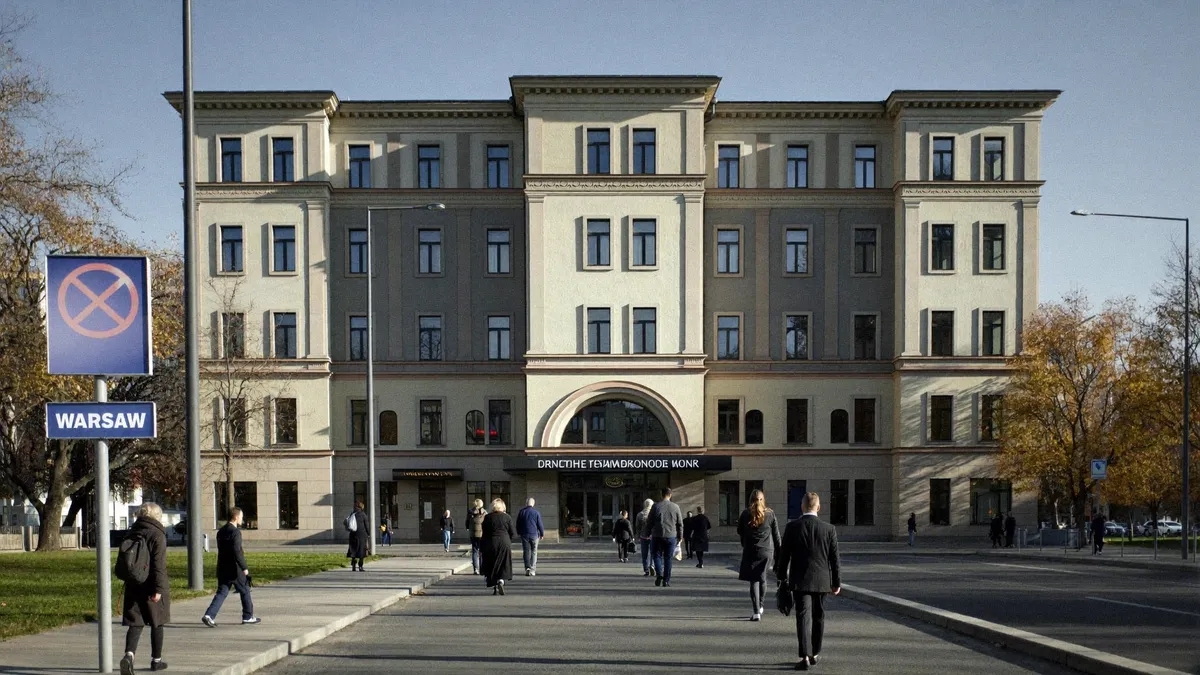
A characteristic landmark is Fort IX Czerniakowski, known locally as Fort Sadyba — a 19th-century fortification of the Warsaw Fortress on ul. Powsińska, today the seat of the Museum of Polish Military Technology. Next to it, on ul. Ciężka, stretches a less representative, more peripheral part of the estate with looser development and areas of former military infrastructure. In contrast to the business character of Górny Mokotów or the dense, urban fabric of Stary Mokotów, Sadyba remains above all residential — without office buildings and without corporate traffic during the day.
How much does an apartment in Sadyba cost — and is it more expensive than in Mokotów?
At the turn of 2025/2026, specific secondary-market offers show a clear spread: a 70 m² flat on ul. Powsińska was priced at about 15,700 zł/m² (October–November 2025), a 38 m² studio on ul. Limanowskiego at 16,500 zł/m² (November–December 2025), and a renovated 82.61 m² unit on ul. Nałęczowska at 23,423 zł/m² (October–November 2025). These are asking prices, not transaction prices — the difference between them in Warszawa in 2025 averaged about 4.2%, i.e. roughly 1,000 zł/m².
| Segment | Sadyba (listings, Q4 2025) | Mokotów — whole district (listing/transaction data) |
|---|---|---|
| Secondary, standard | approx. 16,000–18,000 zł/m² | approx. 14,800–19,300 zł/m² (depending on the source) |
| Secondary, premium/renovated | approx. 20,000–23,500 zł/m² | the high segment is available mainly in Stary Mokotów and Sielce |
| Transaction (NBP, Warszawa, Q4 2025) | no separate data for Sadyba | approx. 16,750 zł/m² (figure for the whole of Warszawa, not just Mokotów) |
| Primary | small supply, no representative sample | approx. 17,200–21,000 zł/m² |
The conclusion is practical: Sadyba is not uniformly more expensive than the rest of Mokotów. Typical flats sit close to the district average, and the premium is paid mainly for a specific address — a renovated unit in the historic part on Goraszewska or Nałęczowska, not for belonging to Sadyba as such. The primary market here is marginal — this is mostly existing development, unlike the areas of new investments closer to Służewiec.
How do you get around from Sadyba — why is the lack of a metro the main difference?
This is the point where Sadyba stands out most from the rest of Mokotów. Stary Mokotów and Służewiec have metro stations within walking distance; Sadyba does not. The nearest one is Metro Wilanowska, and the bus ride usually takes 10–20 minutes depending on traffic and time of day; on foot it is 35–50 minutes (3–4 km).

Buses are the backbone of transport:
- 131, 180, 185 — direct connections with the centre and Dworzec Centralny (about 20–35 minutes outside peak hours)
- 172 — towards western Mokotów
- 163, 187, 189 — additional options towards the centre and the western districts
- night lines (including N31, N33) — for later returns
The nearest tram stops are on ul. Jana III Sobieskiego (the area of Nałęczowska, Czarnomorska, św. Bonifacego) — an 8–15 minute walk from the historic part of the estate. The key bus stops are Sadyba, Wiertnicza and Goraszewska. Getting to the centre of Mokotów and to Pole Mokotowskie takes about 20–35 minutes, usually with a change or on a bus running along Czerniakowska. Anyone who treats metro access as a priority should rather consider offers around Wilanowska or Służewiec than Sadyba itself.
Who lives and rents here — and what is the housing stock like?
The profile of Sadyba’s residents is broader than the villa image suggests. Alongside families who have lived here for generations in houses and small tenement buildings on Goraszewska or Jodłowa, there are families with children who value quiet and greenery, more affluent professionals (lawyers, doctors, managers), seniors in the older buildings and tenants in the newer ones — partly foreigners connected with international companies, for whom the proximity of Wilanów and the centre is an asset. It is a profile more “neighbourly and intelligentsia-like” than ostentatiously exclusive, as is sometimes associated with the new estates of Wilanów.
The buildings combine several layers of history: pre-war small tenement houses and villas on Goraszewska, Jodłowa, Orężna and Morszyńska, post-war blocks around Powsińska and św. Bonifacego, and newer apartment buildings along the larger streets — without the dominance of new development that characterises, for example, Miasteczko Wilanów. The centre of commercial life is Sadyba Best Mall at ul. Powsińska 31 (open, with a Cinema City IMAX) — operating since 2000 and still functioning normally as of the start of 2026, with its tenant mix successively refreshed.
How much does renting cost in Sadyba?
Listings from the turn of 2025/2026 show rates close to the rest of Mokotów, although without full representativeness because of the smaller supply. Indicative asking levels:
| Type of apartment | Asking rent/month |
|---|---|
| 1 room | approx. 2,500–3,500 zł |
| 2 rooms | approx. 3,500–5,000 zł |
| 3 rooms | approx. 5,000–7,000 zł |
| Large/high standard, houses | approx. 7,000–9,500 zł and more |
The amounts in listings usually do not include the czynsz administracyjny (building administration fee), utilities or a parking space — the real monthly cost can be several hundred to over 1,000 zł higher. People planning a long-term rental in Sadyba should also check the rules of najem okazjonalny (occasional lease), including the full set of documents required at signing. With the modest supply in this part of Mokotów, support with renting for tenants helps — finding offers in a specific part of the estate, arranging a viewing and verifying the agreement before signing.
What is worth seeing before deciding to buy or rent?
The greenery of Sadyba is mainly the gardens by the houses, the wide, quiet streets of the historic estate and the proximity of Jeziorko Czerniakowskie and the recreational areas towards Stegny and Wilanów — without a single large city park along the lines of Pole Mokotowskie. It is also worth remembering that Marina Mokotów, despite the associative similarity of the name, is located in a different part of the district, around Racławicka — it should not be confused with Sadyba when choosing a location.
Before buying on the secondary market in this area, it is a good idea to check the legal status and the księga wieczysta (land and mortgage register) — especially in the case of older, pre-war buildings on Goraszewska or Jodłowa, where the technical condition and ownership history can be more complex than in newer buildings.
Sadyba or another part of Mokotów — how to choose?
Sadyba works for people who value quiet, low-rise development and the proximity of Wilanów more than a metro commute — a different trade-off from Stary Mokotów or Służewiec, where you pay for proximity to a station and get denser, more urban fabric. The price per m² alone rarely decides the choice between these locations — lifestyle and the daily route to work do.
If you are looking for a specific apartment in Sadyba — whether to live in with children on quiet Goraszewska, or as a rental investment closer to Powsińska and Sadyba Best Mall — allproperty is available 24/7, including on questions about the specifics of this particular area, its transport links and real transaction prices. Call +48 666 866 468 — we will arrange a viewing and advise whether a given offer in Sadyba really matches market prices in this part of Mokotów. Current offers from Sadyba and neighbouring parts of Mokotów are gathered in the allproperty apartment catalogue.
Common questions
How much does an apartment in Sadyba cost in 2026?
As of the turn of 2025/2026: typical secondary-market flats in Sadyba cost about 16,000–18,000 zł/m², while renovated units in attractive locations reach 20,000–23,500 zł/m². That is close to the Mokotów average (about 16,750–19,300 zł/m² in listings), with the premium segment clearly above it.
Is there a metro in Sadyba?
No, there is no metro station in Sadyba. The nearest one is Metro Wilanowska — the bus ride usually takes 10–20 minutes, and walking about 35–50 minutes (3–4 km). This is the main transport difference from Stary Mokotów or Służewiec, where the metro is within walking distance.
How does Sadyba differ from the rest of Mokotów?
Sadyba is low, largely pre-war villa and small-tenement development around Goraszewska, Jodłowa and Orężna streets, with no office towers and no metro — unlike business-oriented Górny Mokotów or well-connected Stary Mokotów. The price per m² is close to the district average, but what you buy here is quiet and greenery at the cost of commuting time.
Which buses go from Sadyba to the centre?
Direct lines 131, 180 and 185 connect Sadyba with the centre and Dworzec Centralny in about 20–35 minutes outside peak hours. The key stops are Sadyba, Wiertnicza and Goraszewska, and the nearest tram runs along ul. Jana III Sobieskiego, an 8–15 minute walk from the historic estate.
How much does it cost to rent an apartment in Sadyba?
According to listings from the turn of 2025/2026, rates are roughly 3,500–5,000 zł/month for two rooms and 5,000–7,000 zł/month for three rooms, excluding the czynsz administracyjny and utilities. Larger apartments and houses reach 7,000–9,500 zł/month and more.