An apartment in Stary Mokotów — how it differs from the rest of Mokotów
Apartments in Stary Mokotów, Warszawa: around 18,000 zł/m² (August 2026), pre-war tenements, Racławicka metro. How it differs from Służewiec and Sadyba.
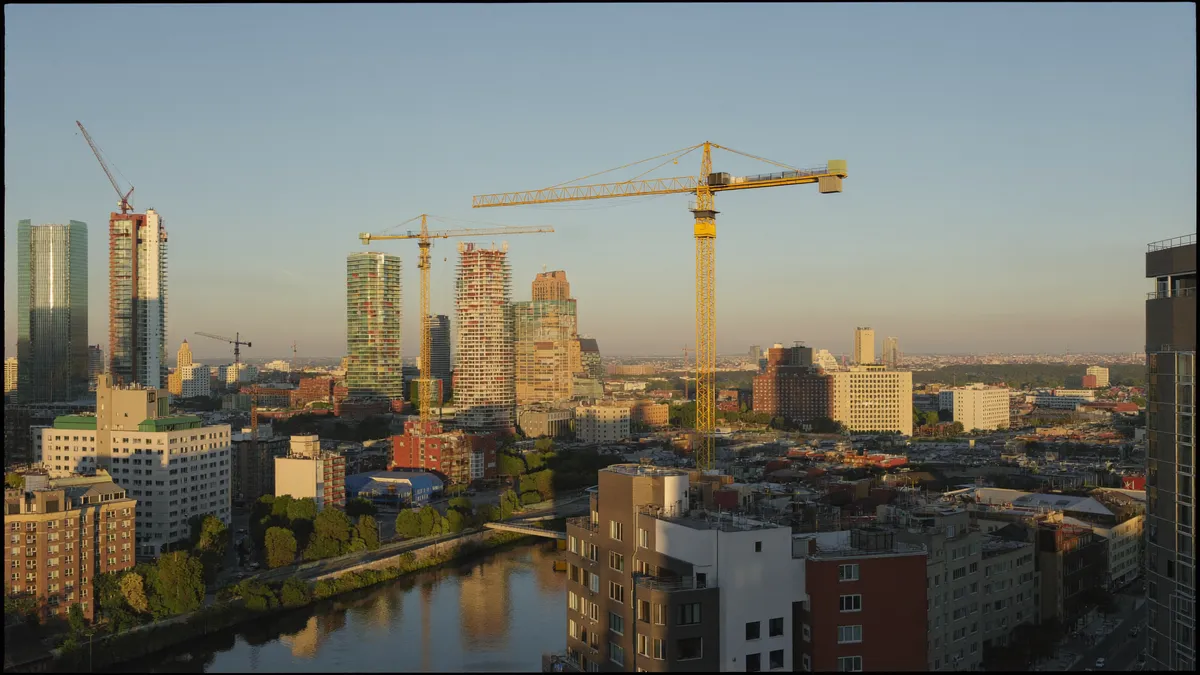
An apartment in Stary Mokotów cost on average around 18,015 zł/m² on the secondary market in July 2026, with a forecast rise to 19,000 zł/m² by the end of the year (SonarHome data, as of August 2026). That is roughly 1,300 zł/m² more than the average price for the whole of Mokotów, valued in the same month at 16,729 zł/m². The reason is the building stock — Stary Mokotów is mainly pre-war tenement houses and intimate villas from 1910–1939 around Puławska and Aleja Niepodległości, rather than the post-war block estates or new apartment buildings that dominate other parts of the district.
The spread of prices here can be enormous, however: from around 13,590 zł/m² on ul. Dworkowa to over 21,000 zł/m² on ul. Kwiatowa or Grażyny. Renting a studio is usually 2,500–3,400 zł a month, and two rooms 3,100–5,800 zł, depending on the distance from the Racławicka metro station. If you are looking for the broader context of the whole district, read our general guide to Mokotów — here we focus solely on what sets Stary Mokotów apart from the rest.
Where exactly is Stary Mokotów and where does the name come from?
Stary Mokotów is not a colloquial label but an official area in the Warsaw City Information System (System Informacji Miejskiej), covering the north-western part of the district, in what is known as Górny Mokotów. Its boundaries are marked out by: the streets Spacerowa, Boya-Żeleńskiego, Batorego and plac Unii Lubelskiej to the north, Klonowa, Spacerowa and the crest of the Warsaw escarpment to the east, Dolna and Racławicka to the south, and Wołoska and św. Andrzeja Boboli to the west. It is the earliest built-up part of Mokotów — the site of a former ducal village mentioned as far back as 1367, incorporated into the administrative boundaries of Warszawa in 1916. After the tsarist forts were demolished in 1911–1913, intensive development began along ulica Puławska and Aleja Niepodległości, and in the 1920s and 1930s most of the tenement houses and villas that survive to this day were built.
How much does an apartment in Stary Mokotów cost compared with other parts of the district?

Mokotów is not a uniform price market — differences between its parts reach as much as 40%. The table below shows the price gradient according to SonarHome data as of August 2026 (secondary market, transaction prices):
| Area of Mokotów | Price per m² | Change since the start of 2026 | Forecast XII 2026 |
|---|---|---|---|
| Siekierki | 18,422 zł | — | 19,928 zł |
| Stary Mokotów | 18,015 zł | +5.14% | 19,000 zł |
| Wyględów | 17,770 zł | — | 19,390 zł |
| Sielce | 16,537 zł | +1.45% | 17,779 zł |
| Służew | 14,951 zł | +4.49% | 16,065 zł |
Stary Mokotów sits close to the top, yielding only to riverside Siekierki. The difference against Służew — the cheapest sub-area — comes to around 3,000 zł/m², that is about 20–23%. On the primary market a square metre in Mokotów cost on average around 22,500 zł in mid-2026 (rynekpierwotny.pl data, June 2026), but there is little new development in Stary Mokotów itself — it is above all a secondary market and renovated tenement houses. Specific streets show how much the address matters here: Chocimska is around 19,500 zł/m², Akacjowa around 19,000 zł/m², while Dworkowa — despite its location in the heart of the district — only around 13,600 zł/m², which usually results from the lower standard of the particular buildings on that street.
How does the building stock of Stary Mokotów differ from Służewiec and Sadyba?
This is where the heart of the difference lies — not in price itself, but in the character of the buildings. Stary Mokotów is mostly tenement houses and villas from before 1939, with higher ceilings, stucco work and stairwells characteristic of pre-war Warszawa, supplemented by the post-war Osiedle Batorego from the 1960s in the south-eastern part. By comparison, Służewiec is almost exclusively blocks from the 1970s–1980s and the office buildings of the Mokotów Business District, while Sadyba and Siekierki developed mainly after 1990 as estates of houses and apartment buildings. The effect is that a 60-square-metre apartment in Stary Mokotów often has a different layout, upper floors without a lift in the older tenement houses and a smaller share of parking spaces than a comparable floor area in the newer part of the district — and that directly affects the price per square metre and who decides to live here.
Who lives in and rents in Stary Mokotów?
The intimate, pre-war building stock and the proximity of the metro attract a different resident profile here than in Służewiec or Ursynów. It is a district valued by families looking for an apartment with character close to the centre, by employees of corporations and of the diplomatic missions from the nearby embassy, and by older people who have lived here for decades in rental tenement houses. In the area of Aleja Niepodległości and Rakowiecka the buildings of the Szkoła Główna Handlowa are still in use, along with the complex of the former Szkoła Główna Gospodarstwa Wiejskiego, erected in the 1920s, which additionally brings students and lecturers here. Both renovated studios in tenement houses and larger apartments on quiet side streets reach the rental market — our general article on renting in Mokotów describes what this profile looks like across the whole district. For tenants who care about a specific street in this area, we offer help with renting an apartment: a selection of listings from tenement houses and blocks, arranged viewings and a check of the contract before signing.
What is public transport like here and what are the landmarks?
The greatest transport advantage of Stary Mokotów over the more distant parts of the district is the M1 metro line with the Racławicka and Pole Mokotowskie stations, which connect the area with Śródmieście and Centrum in a few minutes. In addition, numerous tram and bus lines run along Puławska and Aleja Niepodległości. By comparison, part of Służew and Wilanów relies mainly on the Wilanowska station, which serves the fringes of those areas rather than their centres.
The specific landmarks of Stary Mokotów are plac Unii Lubelskiej as the gateway to the district, park Morskie Oko (17.9 ha, between Puławska, Dworkowa, Belwederska and Promenada) and the adjoining park Promenada, as well as the Szuster Palace at ul. Morskie Oko 2 in the park itself, today the seat of the Stanisław Moniuszko Warsaw Music Society. Ulica Chocimska 28, in turn, is the historic pre-war seat of the district authorities.
Is it worth buying an apartment in Stary Mokotów rather than in another part of the district?
That depends on what the buyer is looking for. If the priority is the character of the building, proximity to the metro and mature greenery — Stary Mokotów justifies its higher price per square metre against Służew or Sadyba, because it offers something new development cannot recreate. If what counts is mainly floor area at a reasonable price and an underground parking space, it is worth looking more widely across the district — our general guide to apartment prices in Mokotów and the catalogue of apartments in Warszawa show the full picture of what is available beyond Stary Mokotów itself. Because of the wide spread of prices between streets within the same sub-area (from around 13,600 to over 21,000 zł/m²), it is worth checking the specific address before buying, not just the general location on the map.
If you are considering buying or renting an apartment in Stary Mokotów and want to verify whether a particular price per square metre on a given street matches the market, the allproperty team is available 24/7 — simply call +48 666 866 468 to get a realistic valuation instead of estimates from a listing. Owners of apartments in the tenement houses of Stary Mokotów who are thinking about renting rather than selling are welcome in the section for owners.
Common questions
How much does an apartment in Stary Mokotów cost in 2026?
According to SonarHome data as of August 2026, the secondary market in Stary Mokotów is valued at around 18,015 zł/m² (July 2026), with a forecast of 19,000 zł/m² by the end of the year. That is more than ten per cent above the average for the whole of Mokotów (16,729 zł/m², SonarHome, August 2026).
How does Stary Mokotów differ from Służewiec?
Stary Mokotów is pre-war tenement houses and intimate villas from before 1939, while Służewiec is mainly blocks from the 1970s–1980s and the office buildings of the Mokotów Business District. According to SonarHome (August 2026) the price difference reaches around 3,000 zł/m², that is about 20% in favour of Służewiec.
How do you get from Stary Mokotów to the centre?
The M1 metro line runs through the district with the Racławicka and Pole Mokotowskie stations, which connect the area with Śródmieście in a few minutes. In addition, trams and buses run along Puławska and Al. Niepodległości, so getting around without a car is more convenient here than in many other parts of Mokotów.
How much does it cost to rent an apartment in Stary Mokotów?
In 2026 studios were rented here for around 2,500–3,400 zł a month, and two-room apartments for 3,100–5,800 zł depending on the standard and the distance from the Racławicka metro station. Apartments in restored tenement houses can be markedly more expensive than those in post-war blocks on the same estate.
Where exactly does the boundary of Stary Mokotów run?
The area is marked out by the streets Spacerowa, Boya-Żeleńskiego and Batorego to the north, Klonowa and the Warsaw escarpment to the east, Dolna and Racławicka to the south, and Wołoska and św. Andrzeja Boboli to the west. It is the oldest built-up part of the district, going back to the beginning of the 20th century.