An apartment in Nowa Praga — how it differs from the rest of Praga-Północ
Nowa Praga in Warszawa: apartment prices of approx. 15–22 thousand zł/m², plac Hallera and Park Praski instead of Ząbkowska, metro Szwedzka nearby.
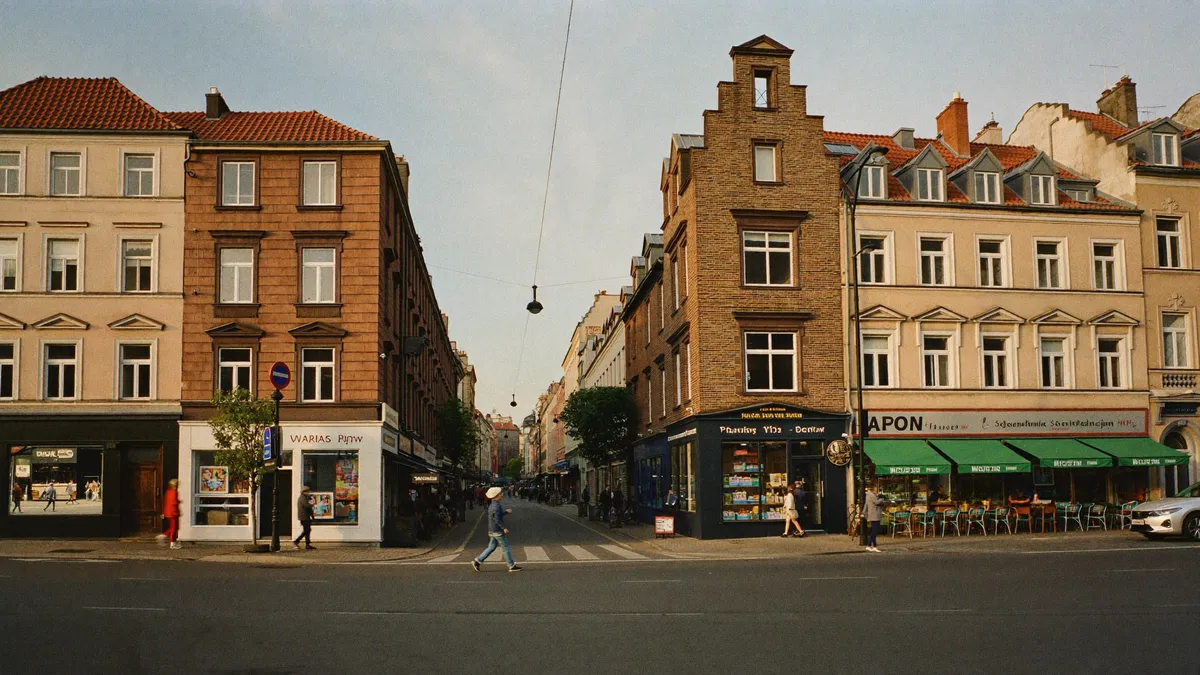
An apartment in Nowa Praga is a completely different proposition from what people associate with Ząbkowska and Stara Praga — and a different price. The median transaction price for the whole Praga-Północ district reached about 17.3–18 thousand zł/m² in July 2026 (RCN data), and Nowa Praga falls within that range with a wide spread: from about 15 thousand zł/m² by the post-war estate at plac Hallera to 17–22 thousand zł/m² in new developments, while specific streets, e.g. Inżynierska, are priced in current listings at about 15–15.2 thousand zł/m². The difference comes from the fact that Nowa Praga is not tenement houses along a historic frontage, but the area around plac Hallera, Park Praski and the Warszawa ZOO — greener, more residential and geographically different from what most people have in mind when they talk about “the atmosphere of Praga”.
This is an important distinction, because in many listings and texts the names Ząbkowska and Nowa Praga are used interchangeably — while geographically Ząbkowska already lies in Stara Praga, south of al. „Solidarności”. If you are looking for a general overview of the whole district, its prices and building types, take a look at the article apartment for sale in Praga-Północ — here we focus solely on how Nowa Praga differs from the rest.
How much does an apartment in Nowa Praga cost?
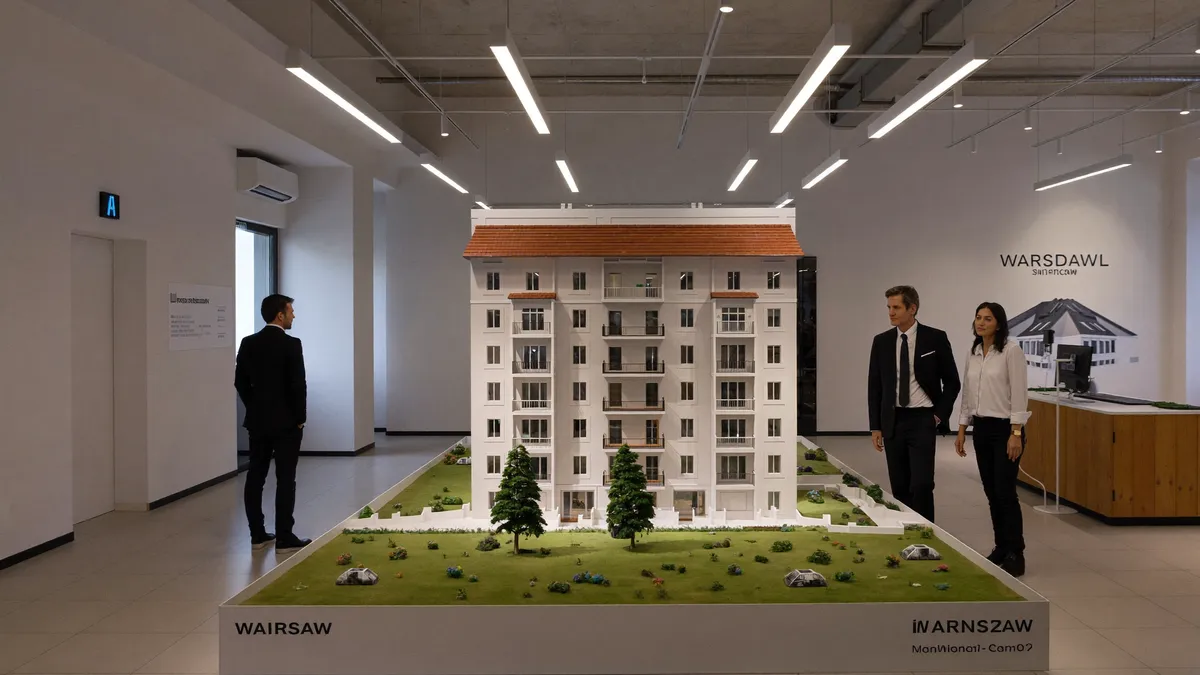
RCN market data for July 2026 show a median transaction price for the whole Praga-Północ district at about 17.3–18 thousand zł/m² — Nowa Praga falls within that range, but with a wide spread depending on the type of building. The post-war estate by plac Hallera is sometimes priced below the district average (about 15 thousand zł/m²), on ul. Inżynierska the estimated asking price is about 15.1 thousand zł/m², and in new developments in the area it goes up to 17–22 thousand zł/m² for smaller, freshly finished studios.
The spread results mainly from the type of building: a post-war estate by plac Hallera without a lift is priced differently from a restored tenement house on Inżynierska or a new developer investment. You will find broader context on prices across the whole of Warszawa in the article apartment prices in Warszawa in 2025.
| Segment | Price per m² (July 2026, indicative) | Notes |
|---|---|---|
| Median transaction price — all of Praga-Północ | approx. 17.3–18 thousand zł | RCN, transaction data from recent quarters |
| Post-war estate — plac Hallera | approx. 15 thousand zł | buildings without a lift, the cheaper segment of Nowa Praga |
| A specific street — Inżynierska | approx. 15.1 thousand zł | listings, pre-war and post-war buildings |
| New developments in the area | 17–22 thousand zł | smaller floor areas, higher finishing standard |
How does Nowa Praga differ from Stara Praga and Ząbkowska?

The boundary is a matter of convention, but the most useful landmark remains al. „Solidarności” — south of it, towards Targowa and Kijowska, Stara Praga begins with Ząbkowska and Brzeska. Nowa Praga lies further north, covering plac Hallera, Park Praski, the area around the ZOO and the streets Stalowa, Ratuszowa, Inżynierska, Wileńska and Szwedzka.
The practical differences show up in everyday life:
- Buildings — Nowa Praga is a mixture of pre-war tenement houses (Stalowa, Inżynierska, Środkowa), post-war estates around plac Hallera and post-industrial land, rather than a continuous tenement frontage as on Ząbkowska.
- Food and retail — Stara Praga concentrates restaurants, bars and galleries around Ząbkowska and Koneser; Nowa Praga has more neighbourhood shops and service points and fewer venues aimed at tourist traffic.
- Greenery — Park Praski and the neighbourhood of the ZOO give Nowa Praga decidedly more recreational space than the compact development of Stara Praga.
- Atmosphere — Stara Praga tends to be described as more urban and commercial, Nowa Praga as more residential and family-oriented, though still with visible street art on blind walls and on the walls by the railway land.
What kind of buildings dominate around plac Hallera and Park Praski?
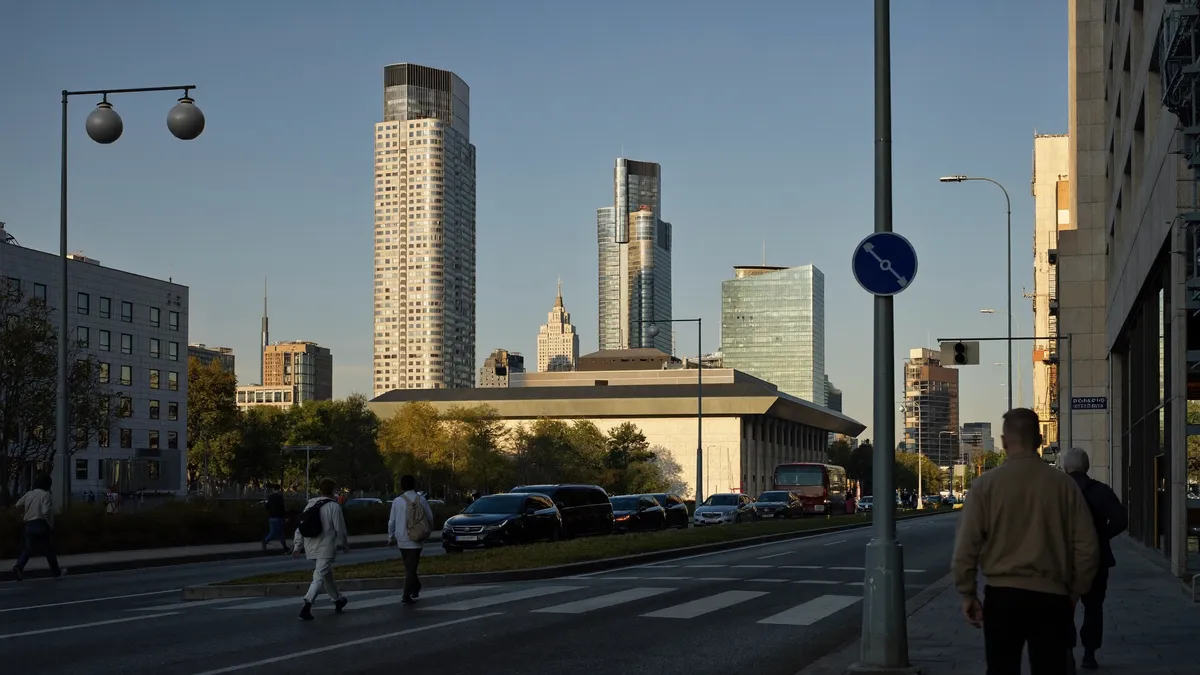
Plac Hallera is a large, post-war residential complex with a more regular layout than the intimate blocks of Stara Praga — a wide, open square, buildings mainly from the second half of the 20th century, local shops and services on the ground floors. This is a completely different type of development from a restored tenement house on Inżynierska or a new investment on Jagiellońska.
In the immediate vicinity, at Jagiellońska 82B, the “Nowa Praga” estate is being built — ultimately about 2,400 apartments, a school, services and over 2.5 ha of green areas. The first stage, covering 280 units, received its occupancy permit in July 2026, which shows that the area around plac Hallera is undergoing a real change of character — from neighbourhood-scale towards larger, planned development with greenery included in the design. For buyers on the primary market this matters, because for apartments from a developer allproperty charges no commission from the buyer — the price stays the same as in the investment’s own sales office.
How do you get around by metro and tram from Nowa Praga?
The commute depends heavily on the micro-location within Nowa Praga, because this area lies between two M2 metro stations:
| Micro-area | To Dworzec Wileński | To the Szwedzka station |
|---|---|---|
| The area of Targowa and al. „Solidarności” | approx. 5–10 min on foot | approx. 15–25 min |
| Plac Hallera / Park Praski | approx. 15–20 min | approx. 15–20 min |
| Stalowa / Szwedzka / 11 Listopada | approx. 15–25 min | approx. 5–12 min |
| Northern Jagiellońska | approx. 25–35 min | approx. 20–30 min |
The metro is complemented by trams on Targowa, al. „Solidarności” and Jagiellońska, plus a bus network along Ratuszowa and Starzyńskiego. For people who value the metro more than the tram, the key is choosing the side of Nowa Praga closer to Dworzec Wileński — in practice this difference of a few streets can change the daily commute to the centre by a dozen or so minutes.
How much does it cost to rent an apartment in Nowa Praga?
Rental rates in Nowa Praga (as of July 2026) usually fall within ranges close to the average for the whole of Praga-Północ, where the median for a studio is about 2,700 zł per month. Specific offers from the area: a 24.5 m² studio on Jagiellońska for about 2,300 zł plus the building fee and utilities, a 25 m² studio on Konopacka for 2,500 zł plus a fee of 560 zł, or 27–28 m² studios by plac Hallera in the range of 2,500–2,700 zł plus a czynsz administracyjny of 350–700 zł.
This is close to the level of the rest of the district, though usually slightly lower than the rates near Ząbkowska and Koneser in Stara Praga, where the proximity of restaurants and tourists pushes prices up. You will find more about renting across the whole district in the article apartment for rent in Praga-Północ.
Who lives and rents in Nowa Praga?
The profile of residents differs from Stara Praga:
- Families with children — they value the proximity of Park Praski and the ZOO, and the calmer, more residential development around plac Hallera.
- People commuting to work by metro — they choose the area closer to Dworzec Wileński or to the Szwedzka station, depending on the direction of their commute.
- Investment buyers targeting long-term rental — Nowa Praga offers lower entry prices than Stara Praga at similar metro accessibility.
- People looking for quiet closer to the centre — compared with bustling Ząbkowska, plac Hallera and the area around Park Praski are markedly calmer in the evenings.
Students and people looking for a typically touristy, café-driven atmosphere appear here less often — for that profile you have to head towards Stara Praga and Ząbkowska.
Summary — Nowa Praga is not the same as Ząbkowska
The key difference is simple: if you are looking for the tenement-house, café atmosphere close to Koneser, then geographically that is Stara Praga, not Nowa Praga. If, on the other hand, you care about the greenery of Park Praski, the calmer development of plac Hallera and prices sometimes lower than right by Ząbkowska, it is worth searching exactly here — checking the exact address, not just the general district name in the listing.
Before you decide on which side of al. „Solidarności” to look for a flat, it is worth seeing current offers from the whole area in the allproperty apartment catalogue, and if you are planning to rent out your flat in this area, check the for owners page. Nowa Praga is an area where a single side street can change both the metro commute and the price per square metre — if you want to check a specific address by plac Hallera, Park Praski or Inżynierska and find out which metro station is closer, the allproperty team is available 24/7 on +48 666 866 468.
Common questions
How much does an apartment in Nowa Praga cost?
According to market data for July 2026, the median transaction price for the whole Praga-Północ district (RCN) is about 17.3–18 thousand zł/m², and Nowa Praga falls within that range — its offers vary from about 15 thousand zł/m² by the post-war estate at plac Hallera to 17–22 thousand zł/m² in new developments. Specific streets, e.g. Inżynierska, are priced in listings at about 15–15.2 thousand zł/m².
How does Nowa Praga differ from Stara Praga and Ząbkowska?
Geographically Ząbkowska already lies in Stara Praga, south of al. „Solidarności” — Nowa Praga is the area further north, around plac Hallera, Park Praski and the ZOO. It has fewer tenement frontages, more post-war estates and greenery, and fewer restaurants and bars on the ground floors.
How do you get to the metro from Nowa Praga?
It depends on the micro-location: the area of Targowa and al. „Solidarności” is about 5–10 minutes on foot from Dworzec Wileński, while Stalowa and Szwedzka are about 5–12 minutes from the Szwedzka station. Plac Hallera and Park Praski lie between the two stations, about 15–20 minutes on foot.
How much does it cost to rent a studio in Nowa Praga?
Studios in this area (as of July 2026) are usually rented for 1,800–3,000 zł plus a czynsz administracyjny of 350–700 zł, for example on Jagiellońska or Konopacka. These rates are close to the median for the whole of Praga-Północ (about 2,700 zł), but below the prices of Stara Praga close to Ząbkowska.
What is the allproperty commission when buying an apartment in Nowa Praga?
When buying on the primary market, allproperty charges no commission from the buyer (0%). For secondary-market transactions the rate is 2% of the value of the property, for plots 3%, and for rentals the commission is 70% of one month's rent.