A unit for food service: HACCP, Sanepid and veterinary inspection in practice
Opening a food business in Warszawa: the Sanepid application 14 days before launch, HACCP paperwork, veterinary inspection and fines for no approval.
To legally open a food service business, you have to file with the state district sanitary inspector (PPIS) an application for approval of the establishment and entry in the register — at least 14 days before the planned launch — and wait for the decision issued after an inspection on site. Filing the application alone does not yet entitle you to sell. Every company serving food must also implement a HACCP system with GHP/GMP procedures — there is no size threshold. If on top of that you produce or place on the market products of animal origin yourself (MOL, RHD, direct sales), you need a separate entry with the district veterinary officer — at least 30 days before launch. Starting without approval means a fine of 1000 to 5000 zł (art. 103 of the Food and Nutrition Safety Act; as of August 2026) and the risk of a decision suspending operations. Below is the whole path step by step: deadlines, documents, requirements and costs.
When should you file the application for approval of the establishment with Sanepid?
The legal basis is the Act of 25 August 2006 on food and nutrition safety (art. 61–64). Every food establishment — restaurant, bar, café, food truck, catering company — must obtain approval and entry in the register of establishments subject to official control by the State Sanitary Inspection before starting operations.
In practice you file with the PPIS competent for the address of the unit a “wniosek o zatwierdzenie zakładu i o wpis do rejestru” (application for approval of the establishment and entry in the register) — at least 14 days before the planned launch. It is worth attaching straight away a floor plan showing the layout of the rooms, a short description of the technological process, a list of refrigeration equipment and the GHP/GMP procedures with the HACCP documentation. After you file, the station arranges an approval inspection on site.
The application itself is free. The fee appears at the inspection stage: 52 zł for starting it plus 17 zł for every hour begun, so a minimum of 69 zł (as of August 2026). Important: legal selling starts only after the approval decision — filing the application is not enough.
Is HACCP mandatory for every food business?
The HACCP system (hazard analysis and critical control points) follows directly from art. 5 of Regulation (EC) No 852/2004 on the hygiene of foodstuffs. It binds everyone who produces, processes, stores or serves food — from a one-person food truck to a restaurant chain. There is no size threshold below which “HACCP does not apply”.
The system rests on seven principles:
- hazard analysis (biological, chemical, physical) at every stage — from delivery to serving the dish,
- identifying critical control points (CCP), e.g. heat treatment temperature,
- setting critical limits (e.g. cold storage at 0–4°C),
- monitoring the CCPs,
- corrective actions when a limit is exceeded,
- verification that the system works,
- documentation and records.
For small food businesses a simplified approach based on good practice guides is acceptable — but “simplified” does not mean “on paper only”. During an inspection the inspector compares the records with reality: if the temperature log looks perfect while the fridge holds 9°C, the problem is twofold.
When is the Veterinary Inspection involved?

A typical restaurant or café that buys meat, fish and dairy from approved suppliers and serves dishes to the final consumer answers to Sanepid alone. The Veterinary Inspection enters the picture when you produce or place on the market products of animal origin yourself under specific models: direct sales, agricultural retail trade (RHD) or marginal, localised and restricted activity (MOL) — for example your own butchery or cheese dairy.
In that case you file an application for entry in the register with the district veterinary officer (PLW) — at least 30 days before starting operations. That is a separate register, independent of the Sanepid one. Establishments that want to place animal products on the entire national or EU market additionally need PLW approval, not just registration.
| Authority | Application deadline | Who it covers |
|---|---|---|
| Sanepid (PPIS) | min. 14 days before launch | all food service, shops, catering |
| Veterinary (PLW) | min. 30 days before launch | production/trade in animal products (MOL, direct sales, RHD) |
What does the inspector check during acceptance of the unit?
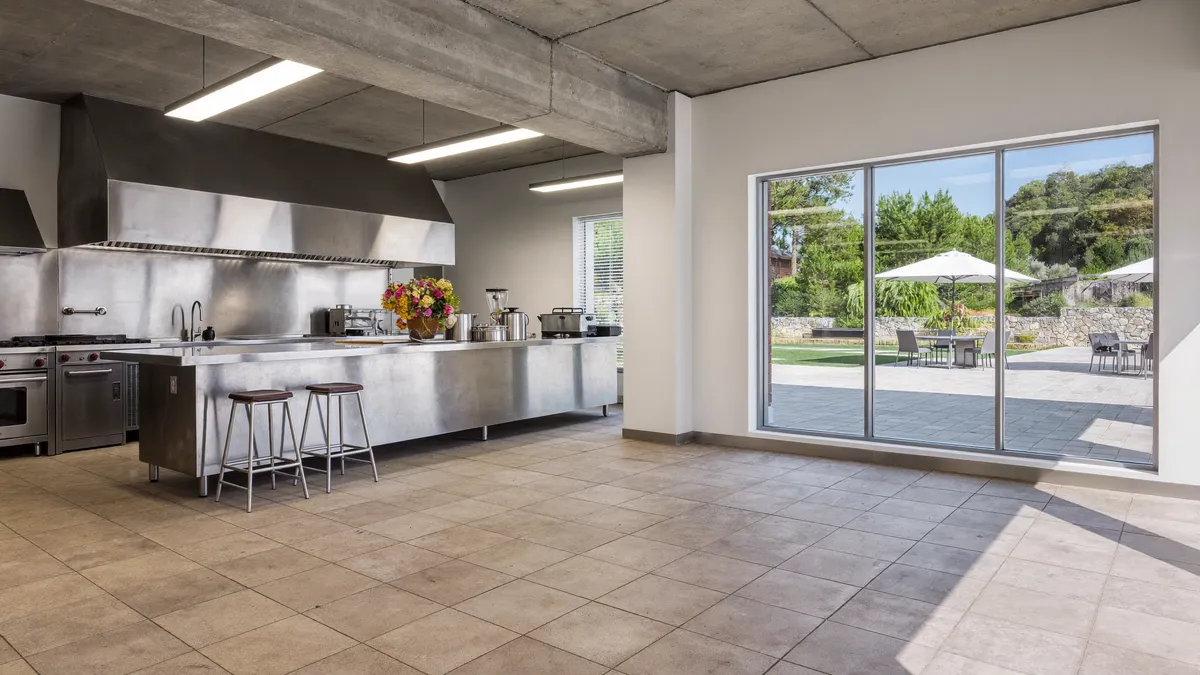
The approval inspection is not a formality — the inspector assesses whether the unit physically allows hygienic work. The standard checklist:
- the layout of rooms and separation of “clean” and “dirty” routes (raw material does not cross paths with the finished dish),
- ventilation — gravity or mechanical, with an extractor hood above heating equipment,
- washable walls and floors that are easy to disinfect in the production zone,
- separate hand-washing basins (with hot and cold water) plus stations for washing food and dishes,
- staff facilities: a toilet for personnel, space for outdoor and work clothing,
- contracts for waste removal, including used cooking oil,
- medical certificates for sanitary and epidemiological purposes for all staff having contact with food.
Which GHP/GMP records do you have to keep day to day?
Good hygiene practice (GHP) and good manufacturing practice (GMP) are the foundation HACCP stands on. In practice that means a handful of simple but systematic logs: temperature of refrigeration equipment (recorded daily), cleaning and disinfection of surfaces, checks on incoming deliveries (temperature, shelf life, condition of packaging), staff training and pest monitoring. This is the first documentation the inspector asks for during every inspection — including unannounced ones after opening.
What fine applies for launching without approval?
Producing or trading in food without filing an application for entry in the register or without approval of the establishment carries a fine of 1000 to 5000 zł (art. 103 of the Food and Nutrition Safety Act; as of August 2026), imposed by decision of the state voivodeship sanitary inspector. When setting the amount the authority takes into account, among other things, the degree of fault and the scale of the business.
A separate risk is a decision suspending operations when an inspection finds a health hazard. For a freshly opened bistro, every week of standstill at rent in the region of 8,000–15,000 zł a month in Warszawa (2026 level) hurts more than the fine itself.
What to look at when choosing a unit — before you sign the lease?
Most problems with Sanepid start not in the kitchen but at the stage of choosing the unit. Before signing the contract check: whether there is a ventilation shaft and a realistic option to install an extractor hood (in a tenement house the housing community’s consent is often needed), what the electrical connection capacity is (a convection oven and a dishwasher can require several dozen kW), whether the sewage system allows a grease separator to be fitted, and whether the current designated use of the unit permits food service — changing the designated use is a procedure under construction law. See also what to watch out for in a lease agreement.
A unit “after food service” usually means lower fit-out costs and faster acceptance — we discuss the scope of works and the budget in more detail in the article on renovating a unit for rental. Another interesting option can be commercial units rented from the city through competitions. It is also worth negotiating in the lease a fit-out period at reduced rent — the Warszawa market standard in 2026 is from a few weeks to 2–3 months.
At allproperty we handle commercial unit leasing for food service in Warszawa: before you sign, we help assess whether the unit has a realistic chance of passing acceptance, and we run the process from negotiating lease terms to contact with a kitchen technology designer. If you are looking for a unit for a restaurant, café or dark kitchen — write to us, terms of cooperation on commercial leasing are agreed individually. If you come across a promising unit in the evening or at the weekend, do not wait until Monday — we work 24/7, call at any hour: +48 666 866 468.
Common questions
How many days before opening a food business do you have to file the application with Sanepid?
You file the application for approval of the establishment and entry in the register with the district sanitary inspector (PPIS) at least 14 days before the planned launch. Filing alone does not let you sell anything — legal operation starts only after the inspection on site and the approval decision, which in practice is worth building into the opening schedule.
Does a small food truck or café also need HACCP?
Yes. The duty to implement HACCP follows from art. 5 of Regulation (EC) No 852/2004 and applies to everyone who produces, stores or serves food — there is no company-size threshold. Small food businesses may use a simplified approach based on good practice guides, but the records have to match what is actually happening in the kitchen during an inspection.
When does a food unit fall under the Veterinary Inspection?
A typical restaurant buying meat and dairy from approved suppliers answers to Sanepid only. The Veterinary Inspection comes in when you produce or place on the market products of animal origin yourself — under the MOL, RHD or direct sales models. In that case you file an application with the district veterinary officer at least 30 days before starting operations.
What fine applies for opening a unit without Sanepid approval?
Running a business without an application for entry in the register or without approval of the establishment carries a fine of 1000 to 5000 zł (art. 103 of the Food and Nutrition Safety Act; as of August 2026). On top of that the inspectorate can issue a decision suspending operations, which at Warszawa rent levels hurts more than the fine itself.
How much does the Sanepid approval inspection cost before opening a unit?
The application for approval of the establishment itself is free. The fee applies to the approval inspection: 52 zł for starting it plus 17 zł for every hour of the inspector's work begun, so a minimum of 69 zł (rates per biznes.gov.pl, as of August 2026). The real cost is preparing the premises and the HACCP documentation rather than the official fee.