Renovating for rent — what raises the rent and what burns the budget
Renovating a flat for rent in Warszawa: what really raises the rent and what burns the budget — costs per m², payback period and durable materials.
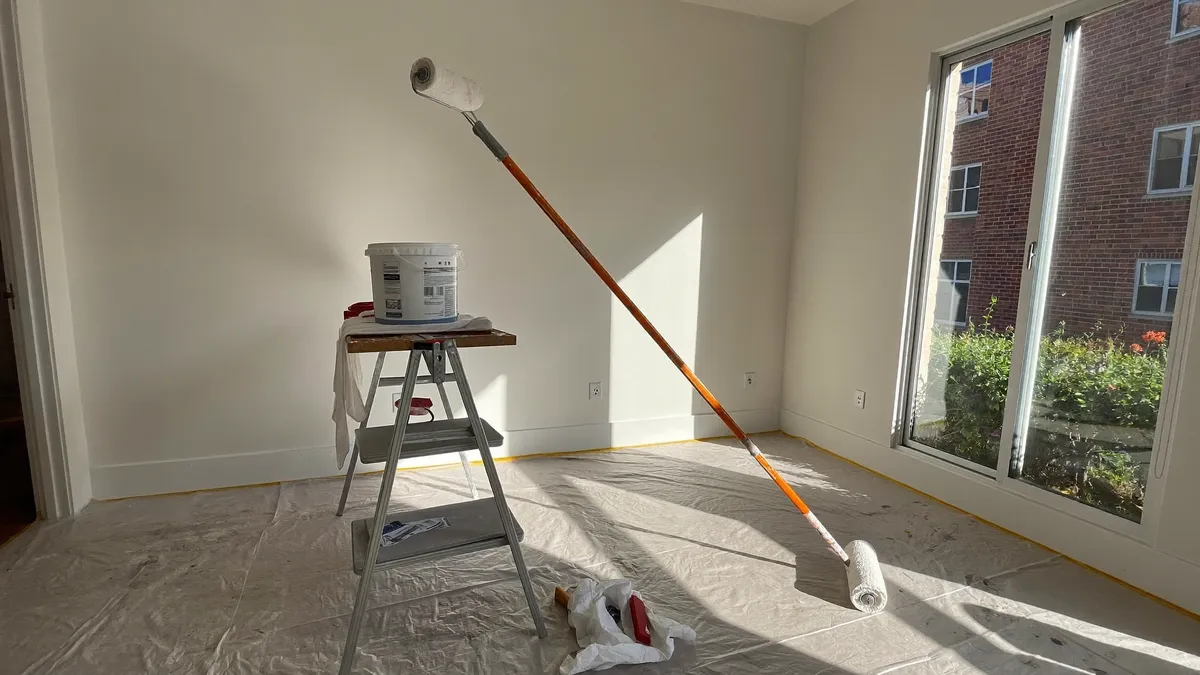
A renovation of a rental flat raises the rent most effectively when it covers painting in neutral colours, refreshing the kitchen without replacing the whole fitted units, bringing the bathroom up to good condition, warm lighting and proper home staging before the photo session — a set that in Warszawa can lift the rent by PLN 300–600 a month for identical floor space and location (rental portal data for July 2026 put the median rent in the city at about PLN 3,500 a month, at an average rate of about PLN 85 per m² — see the current rental rates in Warszawa). What burns the budget, on the other hand, is renovating “for yourself”: a made-to-measure kitchen with a stone worktop and appliances for PLN 40,000–70,000, designer taps, expensive wallpaper or moving walls without a clear functional need — in a typical rental flat those outlays never come back in the rent. A simple test: divide the cost of the renovation by the annual increase in rent; if the payback exceeds 7–8 years, the scope of works is too ambitious for the potential of the location. It is also worth remembering that with private rental settled under the lump sum (8.5% up to PLN 100,000 of revenue a year and 12.5% above that, as of 2026) you cannot deduct renovation costs from the tax base — every zloty has to justify itself on the market, not in the tax return.
How to check whether a renovation will pay for itself in the rent?

The starting point is the market, not your taste. Since the median rent in Warszawa is currently about PLN 3,500, and rates differ even between neighbouring streets, check how much units of a similar size cost in your district at the standard you are aiming for — comparing several current flats for rent from the same area helps. The difference between the current and the target rate is your real “payback budget”.
The arithmetic is simple: the cost of the renovation divided by the annual increase in rent gives the payback period. An example: you spend PLN 20,000 and the rent rises from PLN 3,500 to PLN 3,900. You gain PLN 4,800 a year, so the investment pays for itself in a little over 4 years — faster if you factor in shorter void periods. If the calculation gives a payback longer than 7–8 years, the scope of works is probably too ambitious for the potential of the location.
What in a renovation pays back fastest?
A tenant makes the decision in a few minutes, and judges mainly three things: the bathroom, the kitchen and the general impression of freshness. This is where every zloty works hardest:
- Painting in neutral colours — labour is about PLN 20–40 per m² of wall (as of 2025); in a typical studio the whole job usually comes to PLN 2,000–4,000, and it changes how the flat is perceived more than many a pricier investment.
- A kitchen without replacing the fitted units — new fronts, a worktop, handles and a tap can rejuvenate a kitchen for a fraction of the price of new furniture.
- The bathroom — if the tiles are in good condition, new fittings, lighting, a mirror and refreshed grouting are enough. A full renovation of a 5–6 m² bathroom is an outlay of the order of PLN 20,000–35,000, so put it off until there really is no other option.
- Lighting — a warm colour temperature, several light points instead of a single “chandelier” lamp; the cost starts at a few hundred zloty.
- A uniform, light floor throughout the flat — it visually enlarges the unit and looks good in photographs.
- Air conditioning — in the premium segment and in flats on higher floors it increasingly decides which offer is chosen.
Add to that preparation for the photo session: according to market analyses a well-prepared flat lets noticeably faster and can achieve a rent higher by about 5–15%. Basic home staging of a flat of up to 50 m² costs of the order of PLN 800–2,500.
Where is it easiest to burn the renovation budget?
The costliest mistakes come from renovating “for yourself” rather than for the tenant. A made-to-measure kitchen with a stone worktop and top-shelf appliances can cost PLN 40,000–70,000 — and it will raise the rent by about as much as solid modular units at a third of that price. The tenant pays for functionality, cleanliness and light, not for the brand of the tiles.
Typical traps: elaborate plasterboard structures and suspended ceilings, designer taps, expensive wallpaper, moving walls without a clear functional need, a smart home in a flat let for PLN 3,000 a month. Each of those outlays makes sense at most in a narrow premium segment — in a typical rental flat it is a cost that will never come back in the rent.
Which materials will survive tenant turnover?
A rental flat lives to a different rhythm than your own: tenants change, people move in and out, furniture is dragged across the floor. That is why the criterion for choosing materials should be durability, not looks in a catalogue. What works well are AC4–AC5 class laminate panels or porcelain stoneware instead of delicate wood, washable paints (easy to repaint between tenancies), granite or steel sinks, plain handles without ornament and fronts for which you will still find a replacement in five years. Labour for laying panels is about PLN 25–50 per m², and for floor tiles about PLN 50–120 per m² (as of 2025), so the price difference between a durable and a delicate material is small compared with the cost of a possible replacement after two years.
Will a renovation reduce the tax on rental income?
Since 1 January 2023 private rental has been settled exclusively under the lump-sum tax on recorded revenue: 8.5% up to PLN 100,000 of revenue a year and 12.5% above that (art. 12(1)(4) of the act on the lump-sum income tax; for spouses the threshold for the higher rate is PLN 200,000 — as of 2026). The lump sum is paid on revenue, not on income — which means you cannot deduct renovation costs, furnishings or loan interest from the tax base. Nor can you write the flat off through depreciation (art. 22c(2) of the PIT act). We write more about the mechanics of the settlement and the payment deadlines in a separate article on the lump-sum tax on rental.
The practical conclusion: every zloty spent on a renovation has to justify itself on the market — through a higher rate or a shorter void — because no one will “co-finance” it for you through the tax system. It looks different with rental within a business activity, but that is a separate subject and a decision worth consulting with an accountant.
How much does a renovation for rent cost in 2026?
Labour and material prices work out roughly as follows (as of the turn of 2025/2026):
| Scope of works | Indicative cost | When it makes sense |
|---|---|---|
| Refresh (painting, minor repairs) | PLN 300–600 per m² | Almost always — between tenancies |
| Standard renovation (floors, bathroom in part) | PLN 700–1,200 per m² | When the unit lags behind the competition |
| Full renovation (installations, skim coats, complete finish) | PLN 1,500 per m² and more | Secondary market in poor technical condition |
| Complete renovation of a 5–6 m² bathroom | PLN 20,000–35,000 | When the installations or tiles need replacing |
| Home staging before the photo session | PLN 800–2,500 | Before every publication of the offer |
Add a reserve of 10–20% for surprises to every cost estimate — in older buildings that is almost the rule rather than the exception.
How to plan a renovation for rent step by step?
- Check the asking rates in your district for a similar floor area and standard.
- Set the target rent and calculate the payback period of the planned works.
- Start with the “must fix” items: installations, damp, safety — these do not raise the rent, but they protect you from breakdowns and voids.
- Only then aesthetics: walls, floor, lighting, kitchen, bathroom — in that order, striking off the list whatever the payback budget does not cover.
- Choose materials that resist tenant turnover, not the prettiest ones in the catalogue.
- Finish with a proper photo session — without it even a good renovation will not earn its keep.
If you want to test your cost estimate against market reality, at allproperty we help assess which works make sense at the rates achievable in your location — and for letting the flat you pay either 70% of one month’s rent, once, under Start, or, under Full management, 8% of the rent per month (only for months with a tenant) plus 2% into a small-repairs fund, which remains your money. Renovation is not part of either of these models; on request we can organise it under a separate engagement, on separately agreed terms. If a question comes up during the works as to whether a given decision makes sense for letting the flat, do not wait until morning: we work 24/7, call +48 666 866 468. More about our offer for investors: for owners.
Common questions
How much does renovating a flat for rent in Warszawa cost?
A simple refresh (painting, minor repairs) is PLN 300–600 per m², a standard renovation with flooring and a partial bathroom PLN 700–1,200 per m², and a full renovation with installations and a complete finish from PLN 1,500 per m² upwards (indicative prices, as of 2025/2026). To any of those amounts it is worth adding a reserve of 10–20% for surprises.
Does renovating a rental flat reduce the tax on rental income?
No. Since 1 January 2023 private rental has been settled exclusively under the lump-sum tax on revenue (8.5% up to PLN 100,000 a year, 12.5% above that — as of 2026), and the lump sum is paid on revenue, so you cannot deduct renovation costs, furnishings or depreciation from the tax base.
What raises the rent the most after a renovation?
The fastest payback comes from painting in neutral colours, refreshing the kitchen without replacing the whole fitted units, a bathroom with new fittings and lighting, and warm light at several points. A flat well prepared for the photo session (home staging) can additionally raise the rent achieved by about 5–15%.
How long does it take for a rental renovation to pay for itself?
You calculate the payback period by dividing the cost of the renovation by the annual increase in rent — for example PLN 20,000 of renovation with a rent increase of PLN 400 a month pays for itself in a little over 4 years. If the calculated period exceeds 7–8 years, the scope of works is usually too ambitious for the potential of the location.
What materials should you use in a rental flat so that they do not wear out?
What works well are AC4–AC5 class laminate panels or porcelain stoneware instead of delicate wood, washable paints that are easy to repaint between tenancies, granite or steel sinks, and plain handles and fronts without ornament, for which a replacement can easily be bought in a few years. What counts is resistance to tenant turnover, not looks in a catalogue.