Rental agreement for a residence card and the EU Blue Card: will the office accept it as legal title to the flat, and how does it relate to meldunek?
Is a rental agreement enough for a residence card or EU Blue Card, what legal title to a flat means and how it differs from meldunek. Status as of 16 Nov 2026.
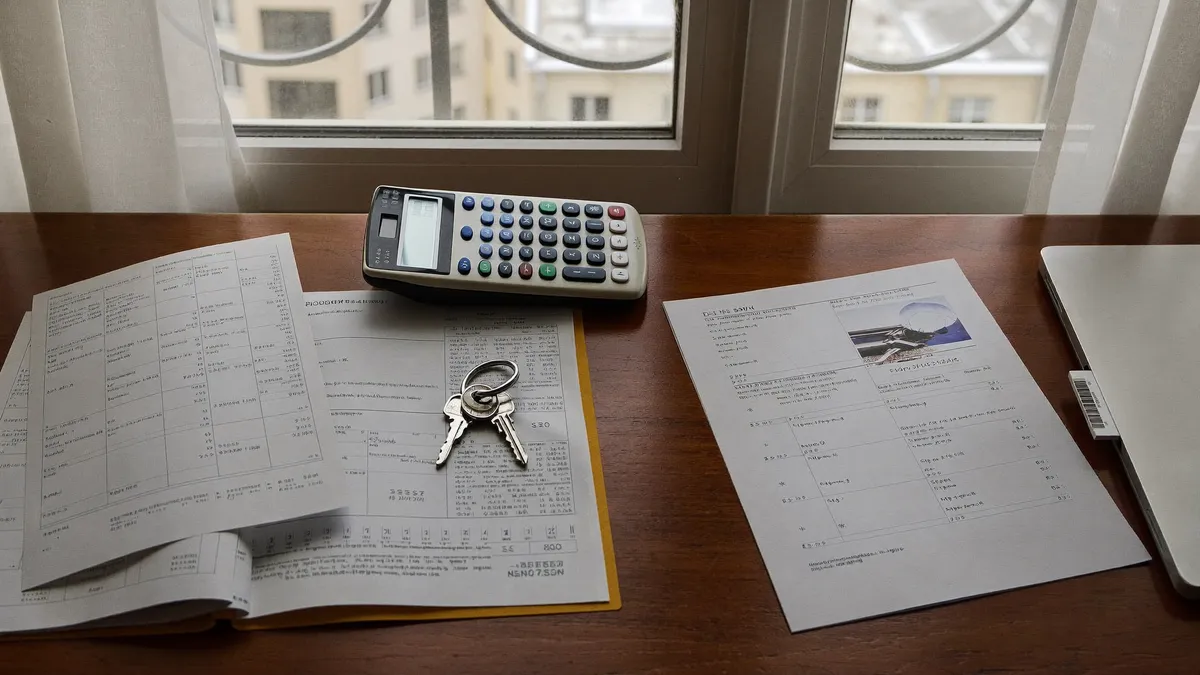
A rental agreement is the most common proof that you have somewhere to live, but the Act on Foreigners (ustawa o cudzoziemcach) does not name it for an ordinary temporary residence permit. For the EU Blue Card, an assured flat is not among the conditions in art. 127. So what counts is the document list of the particular voivodeship office, not a single general “yes” or “no”.
Checked on 16 November 2026. Basis: the Act on Foreigners (consolidated text Dz.U. 2025 item 1079, without later amendments from ELI), the Population Register Act (ustawa o ewidencji ludności, consolidated text Dz.U. 2026 item 384), gov.pl and the Lubuski Voivodeship Office pages. This is general information, not immigration or legal advice.
Do I have to show a rental agreement for a residence card?
It depends on which card. The general rule for temporary residence is in art. 106 ust. 2 of the Act on Foreigners: when applying, you present a valid travel document and attach current photographs and “documents necessary to confirm the data contained in the application and the circumstances justifying” the permit. A rental agreement is not listed there.
In practice, voivodeship offices fill in that provision with their own list. The Lubuski Voivodeship Office (page on the permit for “other circumstances”, updated 3 July 2026) requires a “document confirming an assured place of residence” and gives four examples: a certificate of registration valid on the day of the decision, a notarial deed (for the owner of the premises), a lease of the premises and an owner’s declaration.
A caveat: the Lubuski Office is in Zielona Góra, and Warsaw is served by the Mazowiecki Voivodeship Office. Its BIP (updated 20 August 2025, so from before MOS) gives as examples of documents confirming the place of residence: a rental agreement, a loan-for-use agreement, confirmation of registration and a hotel certificate (reservation). The list may have changed after 27 April 2026, when applications for residence began to be accepted only electronically through MOS, so check the current requirements in the portal.
What is legal title to the premises?
A right to use the premises that you can document: ownership, a rental agreement and, in some cases, a loan for use. The Population Register Act lists examples of documents: a civil-law agreement, an extract from the land and mortgage register (księga wieczysta), an administrative decision, a court ruling (art. 28 ust. 2b).
Importantly, title also includes what the owner gives you: if you are not the owner, the office wants to see a document confirming the title of the person who handed the premises to you. For registration you must show “for inspection” a document confirming the title of the owner or of another entity (art. 28 ust. 2).
One specific difference from the Act on Foreigners. For an EU long-term resident permit, a loan-for-use agreement is not recognised as legal title unless the lender is a descendant, ascendant, spouse, spouse’s parents or a sibling (art. 219 ust. 3). Under this permit, someone living “for free” with a friend has weaker proof than a tenant with an agreement.
Is a najem okazjonalny, room or short-term agreement enough?
We found no provision or office guidance that would exclude them. The office looks at the content: who, which premises, for how long. Three remarks.
Najem okazjonalny (occasional tenancy) is an agreement for a fixed term of no more than 10 years, with a notarial deed and an indication of a substitute flat (art. 19a of the Tenant Protection Act, ustawa o ochronie praw lokatorów). A foreigner with no family in Poland has a separate problem here, which we describe in the article on najem okazjonalny without a substitute flat.
A room in a shared flat is also a tenancy, but the address and the owner’s declaration must allow the office to establish where you live.
A nightly rental is the least certain option, but it is not excluded: the BIP of the Mazowiecki Voivodeship Office (status of 20 August 2025) names a hotel certificate (reservation) among its examples. The declared period of temporary stay at an address may not exceed the period of legal stay according to the document (art. 41 ust. 4 of the Population Register Act). Whether the office will accept a short reservation for your type of permit, ask before you file the application, not after.
Is a rental agreement needed for the EU Blue Card?
We found no such requirement in the Act. A temporary residence permit for work in a highly qualified occupation (art. 127), in practice called the EU Blue Card, requires all of the following: a contract of at least 6 months, qualifications, health insurance, an occupation not on the list from the Act of 20 March 2025 on the conditions for entrusting work to foreigners, and annual gross pay of at least 150% of the average (art. 127 pkt 1–3). Housing is not in that list.
By comparison: a permit for an entrepreneur expressly requires that the foreigner has “an assured place of residence in the territory of the Republic of Poland” (art. 142 ust. 1 pkt 2). Here the rental agreement becomes important.
The documents on the Lubuski Voivodeship Office list for a permit to work in a highly qualified occupation (updated 24 August 2026) include health insurance, an employment contract, qualifications and certificates from ZUS (the Social Insurance Institution) and the tax office. A rental agreement and meldunek are not on the list, but there is a template declaration of address for the residence card. The page does not say when that declaration is required; it looks as if the office collects the address for the card separately from proof of title (our assessment).
How does meldunek differ from legal title to a flat?
Meldunek is a registration; title is a right. The municipality registers you on the basis of a document confirming title: a non-EU foreigner presents the temporary stay registration form, a valid travel document, a document confirming legal stay and a document confirming the right to the premises, for example a rental agreement (gov.pl, updated 11 March 2026). Registration does not create a right to the premises; it requires one in advance.
The deadline is the tricky part. A non-EU foreigner registers no later than the fourth day after arriving at the address, an EU citizen and a family member on the 30th day (art. 41 ust. 1–3). Whoever has no PESEL goes in person (art. 40 ust. 3). A certificate of registration costs 17 zł, while registration itself is free (gov.pl).
If a voivodeship office asks for a certificate of registration “valid on the day of the decision” (as in the Zielona Góra list), the registration must already exist rather than merely be planned. At such an office the order is: agreement, meldunek, application. We describe the next steps after arrival in the article on the first days in Warsaw.
Is an English-language agreement enough at the office?
The rules do not settle this. The Population Register Act says nothing about the language of a rental agreement or about translation, and the Warsaw page on registering for temporary stay (updated 6 July 2026, as cited in our article on the bilingual agreement) asks for the agreement to be shown without naming a language. An official may ask for a Polish version. For a residence card application we did not check the language rules for documents set by the voivode, so ask the office if your agreement is in English.
The simplest solution is a bilingual agreement, which you can ask the owner for. Whether they agree is their decision.
What if the owner does not agree to meldunek?
The owner must confirm on the form that you live at the address. If they refuse, you submit the form with a written explanation; the office conducts administrative proceedings and may issue a decision (gov.pl, 11 March 2026). Is it possible without the owner’s consent? Formally you can try. But if the voivodeship office requires a certificate of registration, you will not get one without meldunek; other proofs from its list, for example a rental agreement, may suffice only if the office accepts them.
Ask about consent to meldunek before you sign the agreement, not after. Write it into the agreement as an obligation of the landlord (a clause, not a verbal promise). This is not a requirement of the Act but our practical advice, because a conversation after you have moved in is in a weaker position than one before.
How can we help?
allproperty finds flats to your requirements, including when it matters that the owner agrees to meldunek and provides documents for the application: we take your questionnaire, choose suitable offers, run viewings online by video, talk to the owner, interpret orally (this is not a sworn translation) and explain the agreement in your language. We do not give legal or residence advice: for which document the office will accept, ask the office, and for a complicated case a lawyer who works with foreigners.
The fee follows the current price list, details on the page for tenants. Tell us that you need a flat with meldunek, along with the date and budget, or call or message on WhatsApp: +48 666 866 468. The brokerage agreement is signed on paper or with a qualified electronic signature.
Sources (checked 16 November 2026)
- Act on Foreigners (ustawa o cudzoziemcach), consolidated text Dz.U. 2025 item 1079: art. 13, art. 106 ust. 1–2a, art. 127, art. 142 ust. 1, art. 219 ust. 2–3.
- Population Register Act (ustawa o ewidencji ludności), consolidated text Dz.U. 2026 item 384: art. 28 ust. 2 and 2b, art. 40 ust. 1 and 3, art. 41 ust. 1–4.
- Mazowiecki Voivodeship Office, temporary residence permit (BIP), updated 20.08.2025; MOS system, 15.04.2026.
- Act on the Protection of Tenants’ Rights (ustawa o ochronie praw lokatorów), consolidated text Dz.U. 2023 item 725: art. 19a ust. 1.
- gov.pl, Zamelduj się na pobyt stały lub czasowy (dla cudzoziemców) (Register for permanent or temporary stay, for foreigners), updated 11.03.2026.
- Lubuski Voivodeship Office, temporary residence permit, other circumstances (updated 03.07.2026) and temporary residence permit, highly qualified occupation (updated 24.08.2026).
Common questions
Do I have to show a rental agreement for a residence card?
It depends on the type of permit. For temporary residence, the Act on Foreigners (art. 106 ust. 2) requires a travel document, photographs and the documents needed to confirm the data in the application; it does not name a rental agreement. Voivodeship offices nevertheless list it as one proof of an assured place of residence, for example the Lubuski Voivodeship Office (page of 3 July 2026) alongside a certificate of registration and an owner's declaration. Check the list for Warsaw in the MOS portal and with the Mazowiecki Voivodeship Office (its BIP page of 20 August 2025, from before MOS, names a rental agreement among its examples).
Is a rental agreement needed for the EU Blue Card?
In the Act, the conditions for a permit to work in a highly qualified occupation (art. 127) include a contract of at least 6 months, qualifications, health insurance and pay of at least 150% of the average; an assured flat is not among them. The document list of the Lubuski Voivodeship Office (updated 24 August 2026) does not mention one either. That does not mean the office will not ask for an address: the application contains the data from art. 13 of the Act, including the place of residence or stay, and the voivode may call on you to supplement documents within a period of not less than 14 days (art. 106 ust. 2a).
How does meldunek differ from legal title to a flat?
Legal title is your right to use the premises, for example under a rental agreement. Meldunek is the registration of residence with the municipality (gmina), which is based on exactly such a document confirming title (art. 28 ust. 2 and 2b of the Population Register Act, applied to foreigners under art. 40). Registration does not create a right to the premises.
Is an English-language agreement enough at the office?
No provision we found settles this: the Population Register Act says nothing about the language of a rental agreement. The office may ask for a Polish version, so ask in advance or ask the owner for a bilingual agreement (we describe this in our article on the English-language agreement).
Is najem okazjonalny or a room enough as legal title?
We found no provision or guidance that would exclude these agreements. The office assesses whether the document confirms an assured place of residence for the period of stay. With najem okazjonalny (occasional tenancy), remember that the period of stay at the address may not exceed the period of legal stay (art. 41 ust. 4 of the Population Register Act), and an occasional agreement is for a fixed term of no more than 10 years (art. 19a ust. 1 of the Act on the Protection of Tenants' Rights).
What if the owner does not agree to meldunek?
The owner or another entity with legal title must confirm on the form that you live at the address. If they refuse, you can submit the form with a written explanation; the office then conducts administrative proceedings and may issue a decision (gov.pl, updated 11 March 2026). An owner's refusal is an important warning sign before you sign the agreement, because a non-EU foreigner has four days after arrival to register.
Is a loan-for-use agreement legal title?
For a long-term EU resident permit, the Act on Foreigners does not treat a loan-for-use agreement (umowa użyczenia) as legal title unless the lender is a descendant, ascendant, spouse, spouse's parents or a sibling (art. 219 ust. 3). We found no such exclusion in the Act for temporary residence, but the list of proof of residence differs between offices.