The property market in 2026 — five trends worth knowing
Five property market trends for 2026: cheaper mortgages, institutional PRS rental, energy classes A+ to G, compact floor areas and remote buying in Warszawa.
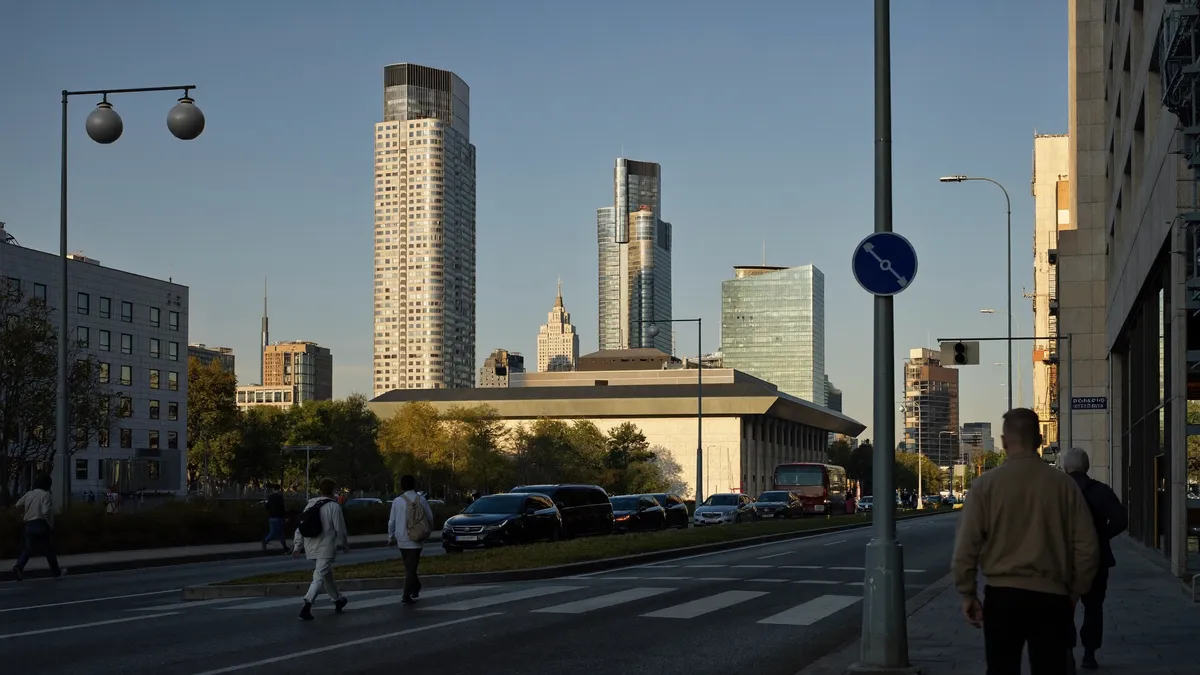
The property market in Poland in 2026 is being shaped by five factors: cheaper credit, the growth of institutional rental, new energy labels, smaller floor areas and transactions at a distance. The NBP reference rate has fallen from 5.75% in 2025 to 3.75% (as of August 2026, after the cut of 5 March), which lowers the instalment on a PLN 500,000 loan by several hundred zloty a month. The institutional rental sector (PRS) grew to about 28,500 flats at the end of 2025, but that is still only 2% of the rental market. From 29 May 2026, under the EU EPBD directive, energy certificates are to show clear classes from A+ to G. The median price on the secondary market in Warszawa reaches about PLN 16,400 per m² (January 2026), and compact studios and two-room flats of up to 50 m² sell fastest. Buying a flat without a visit to Poland — through a notarial power of attorney and remote verification of the land and mortgage register — has become routine, especially among Poles working abroad. Below are the details of each trend and a checklist for 2026.
What does a mortgage cost today and how have instalments changed in 2026?
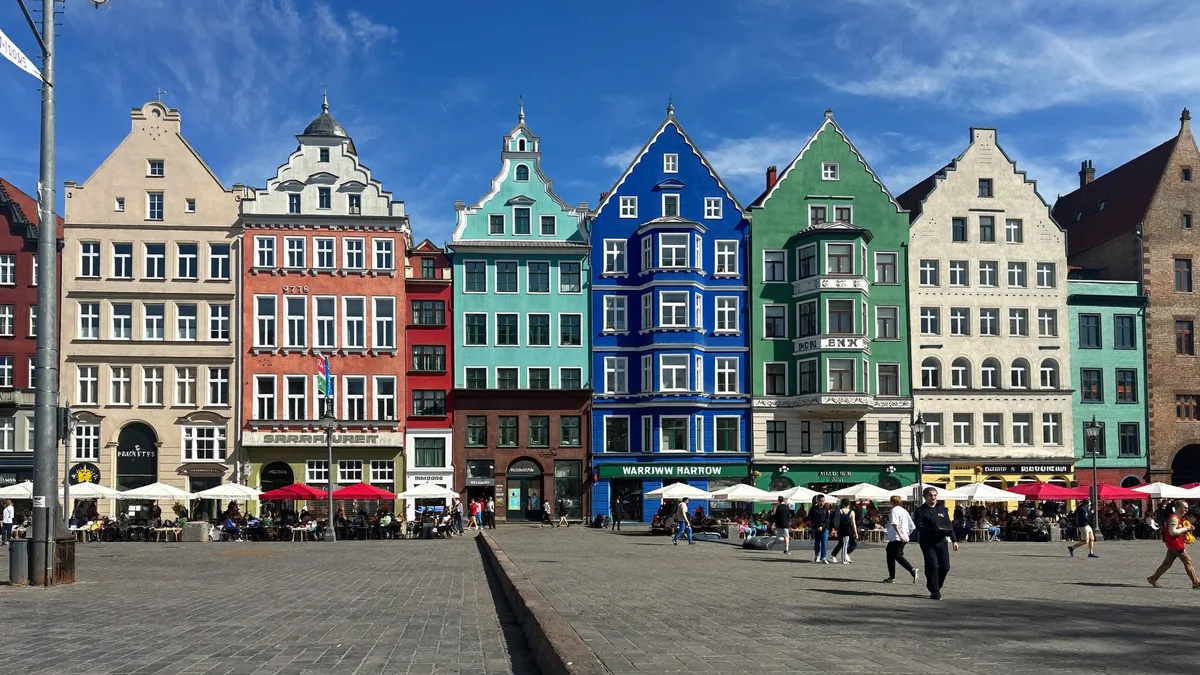
In 2025 the Monetary Policy Council cut rates by a total of 1.75 percentage points: the reference rate fell from 5.75% to 4.00% (cuts in May, July, September, October, November and December). The Council continued the cycle in 2026 — on 5 March it lowered the reference rate to 3.75%, and since July has kept it at that level (the August sitting is traditionally a non-decision one, and the next decision falls on 8-9 September 2026). WIBOR 3M is hovering around 3.82% and WIBOR 6M around 3.85% (as of August 2026).
What does this mean in practice? Every PLN 100,000 of a loan taken out over 30 years means a noticeably lower instalment today than at the start of 2025, and on a PLN 500,000 loan the saving reaches several hundred zloty a month — along with higher borrowing capacity at the same income. Before you compare offers, check step by step how to buy a flat with a mortgage in Warszawa. Demand is returning gradually, without the euphoria of previous years, because flat prices remain high and banks calculate capacity cautiously.
What is institutional rental (PRS) and how is it changing the rental market?
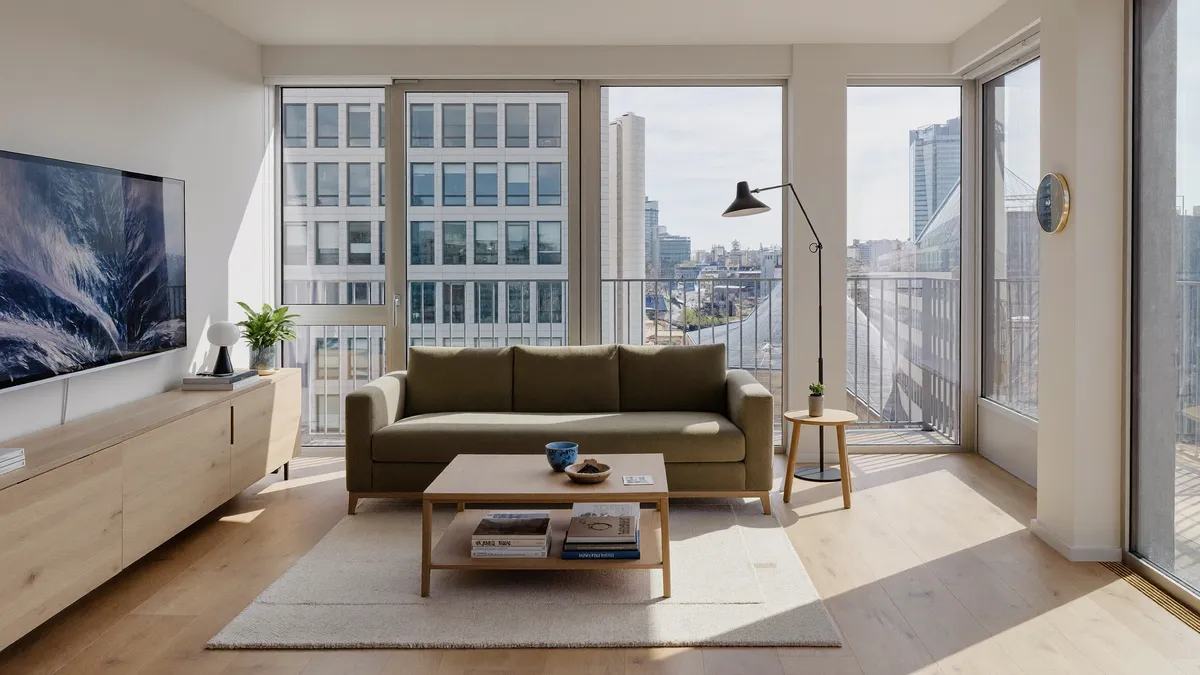
2025 was a record year for PRS (Private Rented Sector — institutional rental, in which whole buildings belong to funds and developers). At the end of 2025 there were about 28,500 PRS flats in Poland across 153 projects, and in 2025 alone about 5,800 were added. The leaders are the Resi4Rent (about 6,200 units) and Vantage Rent platforms; roughly one third of the stock is in Warszawa. A loud signal of consolidation is the announced sale of more than 5,300 Resi4Rent flats to Vantage for about PLN 2.4 billion.
For a tenant, PRS means predictability: professional agreements, technical servicing, rents in the range of about PLN 75-136 per m² a month depending on the city — and vacancy at a mere 3.5% or so. For a private owner it means growing competition on the quality of service — matching it is often easier when someone runs the flat day to day, and that is what our rental management offer for owners is for. It is worth keeping the scale in mind, though: PRS is still only about 2% of the entire rental market in Poland. It is a trend that sets standards — not a revolution that displaces private landlords.
When will the new A+ to G energy classes come in on certificates?

By 29 May 2026 Poland is to implement the EU EPBD buildings directive, and with it standardised energy classes from A+ to G on energy performance certificates — as legible as the label on a fridge. Because of the drawn-out legislative work, some industry sources point to a possible shift of full implementation into the second half of 2026 (as of August 2026). The certificate itself is already compulsory today for sale and rental — it is valid for 10 years, its absence at a transaction risks a fine, and drawing one up for a flat usually costs about PLN 300-650.
The arithmetic is simple: heating an energy-hungry building (of the order of 200 kWh per m² a year) can cost several times more than heating an energy-efficient one. According to market analyses, units in high energy classes already sell at about 10-15% more than comparable but energy-hungry ones. If you are planning to sell a flat in an older building, documents confirming thermal modernisation (insulation, replaced windows, a new heat source) stop being a “nice extra” — they become a pricing argument.
Which flat sizes sell fastest today?
Warszawa remains the priciest market in the country: at the end of 2025 the average asking price approached PLN 17,000 per m², and the median transaction price on the secondary market is about PLN 16,400 per m² (as of January 2026). A typical purchased flat is about 49 m² and costs about PLN 800,000 — the market is voting with its wallet for compact two-room units, which are the easiest to sell and the easiest to let. A full overview of prices is in the article on flat prices in Warszawa.
Indicative average asking prices in the largest cities (December 2025):
| City | Asking price per m² |
|---|---|
| Warszawa | approx. PLN 17,000 |
| Kraków | approx. PLN 15,700 |
| Gdańsk | approx. PLN 14,700 |
| Wrocław | approx. PLN 13,200 |
Count the transaction costs too. On a purchase on the secondary market you will pay 2% PCC (podatek od czynności cywilnoprawnych, tax on civil law transactions) — on a flat costing PLN 600,000 that is PLN 12,000. But if this is your first flat, you can use the PCC exemption in force since 2023 (the act on the tax on civil law transactions). On the primary market there is no PCC on the purchase, because the price includes VAT.
Can you buy a flat in Warszawa remotely, from abroad?
Yes. Viewing a flat by video call, verifying the księga wieczysta (land and mortgage register) online in the EKW browser of the Ministry of Justice (free of charge, by register number), a reservation agreement signed electronically, and an akt notarialny (notarial deed) through a proxy — for buyers working abroad this is now a standard route, not an exotic one. More and more transactions in Warszawa are being handled by people who physically appear in Poland only at the handover of the keys — or not at all, acting through a notarial power of attorney. We describe the full process in the guide to buying a flat remotely from abroad.
At allproperty we handle this in 8 languages: from online presentations, through assembling the documents, to coordination with the notary. Buyers from Australia or the USA sometimes write to us in the middle of the night by Polish time — we work 24/7, so a question about documents does not wait until morning: +48 666 866 468.
How to prepare for the changes in the property market in 2026?
- Buying with a mortgage? Check your borrowing capacity now — after the rate cuts in 2025 and March 2026 it may be noticeably higher than you assume.
- Selling? Order the energy performance certificate early and gather your modernisation documents — the energy class from A+ to G will be visible to every buyer.
- Letting a flat? Compare your standard with the PRS offer in the area: the condition of the unit, the speed of response to faults, a transparent agreement.
- Investing in floor area? Compact two-room units remain the most liquid segment — both for sale and for rent.
- Buying from abroad? Prepare a notarial power of attorney and check the land and mortgage register online before you pay a deposit.
2026 rewards the prepared: cheaper credit improves buyers’ options, but the energy class and the liquidity of a given floor area are differentiating prices ever more strongly. If you want to go through a purchase, a sale or a rental in Warszawa calmly, get in touch with allproperty — on a purchase of a flat from a developer the buyer pays us no commission (0%), on the secondary market the commission is 2%, and a conversation about your situation costs nothing: +48 666 866 468.
Common questions
What is the NBP reference rate in 2026 and how does it affect loan instalments?
Since 5 March 2026 the NBP reference rate has stood at 3.75% and the Monetary Policy Council has kept it unchanged since July (the next decision falls on 8-9 September 2026). This is the result of the cutting cycle from 5.75% in 2025. The instalment on a PLN 500,000 loan over 30 years is noticeably lower today than at the start of 2025, and borrowing capacity is higher.
How many PRS flats operate in Poland and what share of the rental market do they have?
At the end of 2025 there were about 28,500 PRS flats (institutional rental) in Poland across 153 projects, roughly one third of them in Warszawa. Despite the rapid growth, PRS is still only about 2% of the entire rental market in Poland - the segment sets quality standards, but does not dominate in numbers.
From when do the new A+ to G energy classes apply on certificates?
The EU EPBD directive sets the implementation deadline at 29 May 2026, although the Polish legislative work may push the full entry into force into the second half of 2026. An energy performance certificate is already compulsory today for sale and rental, is valid for 10 years, and usually costs PLN 300-650.
How much does a flat in Warszawa cost at the start of 2026?
As of January 2026 the median transaction price on the secondary market in Warszawa is about PLN 16,400 per m², and the average asking price is approaching PLN 17,000 per m². A typical purchased flat is about 49 m² and costs about PLN 800,000 - compact studios and two-room flats sell fastest.
Can you buy a flat in Warszawa remotely, from abroad?
Yes - viewings by video call, verification of the land and mortgage register in the EKW system of the Ministry of Justice, an electronic reservation agreement and a notarial deed through a notarial power of attorney are all routine today, with no physical presence in Poland. allproperty handles this in 8 languages, from online presentations through to coordination with the notary.