Technical handover of a flat from a developer — a checklist
Technical handover of a flat from a developer in Warszawa: checklist, tolerances in mm, the statutory 14- and 30-day deadlines and the cost with an engineer.
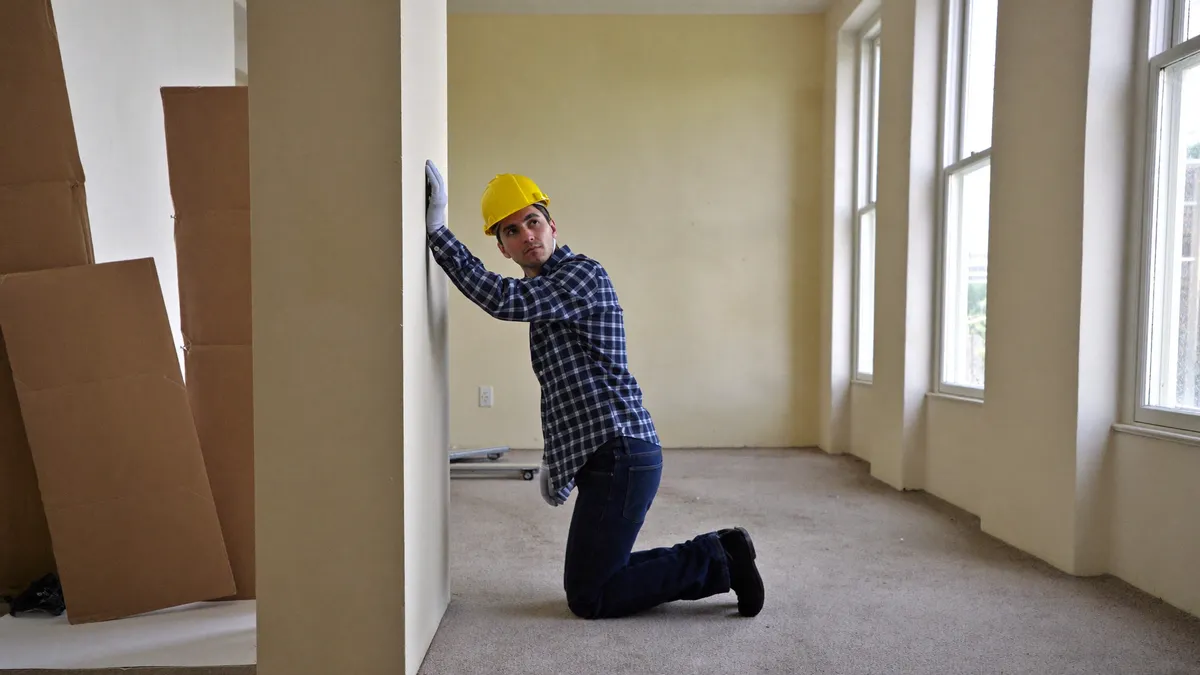
The technical handover of a flat from a developer means drawing up a report in which you record all the defects of the unit. From the signing of the report the developer has, by statute, 14 days to accept or reject the defects (a lack of response means acceptance by operation of law) and 30 days to remove them — that is art. 41 of the 2021 developer act, still in force in 2026. Workmanship tolerances are measurable: for gypsum plaster a maximum 5 mm gap under a 2 m straightedge, a deviation of the wall from vertical of up to 3 mm per 1 m. In the case of a material defect (for example ventilation that does not work anywhere in the unit) you may refuse the handover. A handover with a construction engineer costs in Warszawa — as of August 2026 — usually PLN 400-900 for a flat of up to 60 m2 and pays for itself with a single more serious defect. Regardless of the report, you have a 5-year rękojmia (statutory warranty) for physical defects of the unit. Below are the checklist, the standards in figures and the procedure step by step.
What is the legal basis for the technical handover?

The handover of a unit is governed by the act of 20 May 2021 on the protection of the rights of buyers of residential units or single-family houses and on the Developer Guarantee Fund (Journal of Laws 2021 item 1177), fully in force since 1 July 2022. Under its art. 41 the handover takes place in the presence of the buyer, after the developer has obtained the occupancy permit and before ownership is transferred. A report is drawn up from the handover, in which you report the defects of the unit; it also records any refusal of handover on grounds of a material defect. The statutory deadlines are counted in calendar days (art. 111 of the Civil Code) — weekends and public holidays do not extend them.
Since 13 February 2026 an amendment to the act has also been in force (Journal of Laws 2026 item 27): in agreements concluded from that date the price of the unit must be the product of the usable floor area — calculated exclusively according to the Polish Standard — and the rate per 1 m2, so the developer will no longer add the area under partition walls. The key provisions are worth catching before you sign the umowa deweloperska (developer agreement).
What should you check at the handover, and what should you measure it with?

Take with you: a 2 m straightedge with a spirit level, a set square, a feeler gauge, a socket tester, a torch, a laser measure or tape, a sheet of paper and a phone for photos. You check, in order:
- Plaster and walls — you hold the straightedge against the surfaces and the vertical, the set square into the corners; you look for scratches, cracks, detachment and traces of damp.
- Screeds — evenness under the straightedge, cracks, perimeter expansion joints at walls and thresholds.
- Windows and balcony doors — full opening and tilt, adjustment of the sashes, scratches on the panes and profiles (assessed from about 1 m in daylight), tightness of the seals.
- Ventilation — a sheet of paper held against the grille should be clearly drawn in; no draught or a reverse draught is a defect for the report.
- Electrics — a tester in every socket, testing all lighting points, the doorbell and the intercom.
- Water and sewage — connections in line with the design, no traces of flooding, a fall on the balcony towards the drain.
- Floor area and appurtenances — measurement of the area, the condition of the storage room and the parking space.
How far can the developer “miss”? The standards in figures
Not every unevenness is a defect — the standards allow for workmanship tolerances. For machine-applied gypsum plaster (category III) the reference point is the PN-B-10110:2005 standard:
| Element | Permissible deviation |
|---|---|
| Plaster surface | up to 5 mm under a 2 m straightedge, max. 3 gaps |
| Deviation of the wall from vertical | up to 3 mm per 1 m; up to 6 mm in total at a height of up to 3.5 m |
| Right angle in a corner | up to 4 mm on a 1 m arm |
| Screed | local gaps of up to 5 mm under a 2 m straightedge |
| Ventilation (PN-83/B-03430/Az3) | kitchen with a gas cooker 70 m3/h, bathroom 50 m3/h, WC 30 m3/h |
Exceeding these values is a workmanship defect, which you enter into the report with its location and dimension. A practical trick: if a stack of three two-złoty coins (about 6 mm) fits between the straightedge and the wall, the 5 mm tolerance has been exceeded.
How much time does the developer have? The deadlines from the report
Enter every defect, even a small scratch on a pane, into the report. Two deadlines from art. 41 of the act run from its signing:
- 14 days — the developer delivers to you, on paper or another durable medium, information about accepting the defects or a statement of refusal giving the reasons. A lack of response within the deadline means the defects have been accepted by operation of law.
- 30 days — that is how long it has to remove the accepted defects. If, despite due diligence, it does not manage in time, it must indicate a new, justified deadline that does not cause you excessive inconvenience.
If the developer does not remove the defects within the deadline or does not give one at all, you set your own, final deadline — once it passes without effect you may remove the defects at the developer’s expense (so-called substitute performance, written directly into the act, without court proceedings).
When can you refuse the handover? A material defect
A material defect is a fault that makes it impossible, or significantly harder, to use the flat as intended — for example no utilities, flooding, ventilation that does not work anywhere in the unit or a layout of walls that does not match the agreement. The procedure depends on the developer’s reaction:
- if the developer accepts the material defect in the report — it removes it within the deadlines described above, but once those pass without effect you may withdraw from the agreement;
- if the developer refuses to accept the material defect — you may refuse the handover, and the parties set a date for a repeat handover;
- a refusal at the repeat handover requires the opinion of a construction expert (you file the application within one month of the refusal); if the expert confirms the defect, the cost of the opinion falls on the developer.
This is a powerful instrument: with a genuinely serious defect the developer cannot “push” the keys on you or threaten penalties for not taking the handover. It is also worth knowing how to check a developer before signing the agreement.
Should you take the keys despite the defects?
With ordinary defects — scratches, minor deviations, windows that need adjusting — usually yes. A signed report with a list of defects secures your claims, and you can start the fit-out; when the keys are handed over, a protokół zdawczo-odbiorczy (handover report) with meter readings is additionally drawn up. Regardless of the report, you have a 5-year rękojmia (statutory warranty) for physical defects of the property (art. 568 § 1 of the Civil Code), counted from the release of the unit — covering defects revealed later as well, for example shrinkage cracks after the first heating season. Photograph the defects with a date stamp and report them in writing, not by phone.
How much does a handover with an engineer cost and is it worth it?
In Warszawa the handover of a flat of up to 60 m2 with a construction engineer costs — as of August 2026 — usually PLN 400-900, and PLN 900-1,300 for larger units. Typical surcharges are a thermal imaging camera inspection (PLN 150-300) and travel outside the city (PLN 100-200); a group handover with neighbours lowers the rate by about 15%. Handover firms report an average of a dozen or so to thirty defects in a standard developer unit, most of which a layperson overlooks. The arithmetic is simple: detecting one more serious defect — even a crooked screed that you would otherwise have corrected at your own expense before laying the floor — repays the cost of the service with interest. If you are still choosing a development, compare offers from the primary market for build quality too — the finishing standard can differ between developers more than the price per metre.
At allproperty we organise technical handovers with an engineer for clients buying on the primary market, where we charge no commission from the buyer (0%). We help keep track of the deadlines from the report and, after the handover — on request — take charge of the fit-out or renovation. If during the handover you come across something unclear — a suspicious crack, no draught in the ventilation, a dispute with the developer on the spot — call straight away, even in the evening or at the weekend: we operate 24/7 on +48 666 866 468. Planning a handover in Warszawa or the surrounding area? Get in touch or take a look at our catalogue of flats — we will tell you what to watch out for in your development.
Common questions
How long does the developer have to remove the defects listed in the handover report?
Under art. 41 of the 2021 developer act, the developer has 14 days from the signing of the report to accept or reject the reported defects and 30 days to remove the accepted ones. A lack of response within 14 days means the defects are accepted by operation of law. The deadlines are counted in calendar days and they apply in 2026 as well.
How much does a flat handover with an engineer in Warszawa cost in 2026?
According to price lists from August 2026, the handover of a flat of up to 60 m2 with a construction engineer usually costs PLN 400-900 in Warszawa, and PLN 900-1,300 for larger units. Typical surcharges are a thermal imaging camera inspection (PLN 150-300) and travel outside the city (PLN 100-200). A group handover with neighbours from the same development lowers the price by about 15%.
Can you refuse to take over a flat from a developer?
Yes, but only in the case of a material defect — one that makes normal use of the unit impossible, for example no utilities or ventilation that does not work. If the developer refuses to accept the defect, the parties arrange a repeat handover, and a further refusal requires the opinion of a construction expert, applied for within one month. The procedure is described in art. 41 of the 2021 act.
What deviations of walls and plaster are permissible at handover?
Under the PN-B-10110:2005 standard for category III gypsum plaster, gaps of up to 5 mm under a 2 m straightedge are permissible (a maximum of 3 of them), a deviation of the wall from vertical of up to 3 mm per 1 m and up to 6 mm in total at a height of up to 3.5 m, and a 4 mm deviation of the right angle on a 1 m arm. Larger values are a defect for the report.
Should you take the keys if the flat has defects?
With ordinary defects — scratches, minor deviations, windows that need adjusting — usually yes: a signed report with a list of defects secures your claims. Regardless of the report, the buyer is entitled to a 5-year statutory warranty (rękojmia) for physical defects of the property (art. 568 § 1 of the Civil Code), counted from the release of the unit and covering defects revealed later as well, for example after the first heating season.